
Topic overview
Briefly
- Iran announced the Strait of Hormuz will remain closed until Trump meets their demands.
- U.S. oil reserves hit a new low as the economy teeters.
- Iran's strategy is to wait out Trump's term, avoiding both war and agreement.
What happened
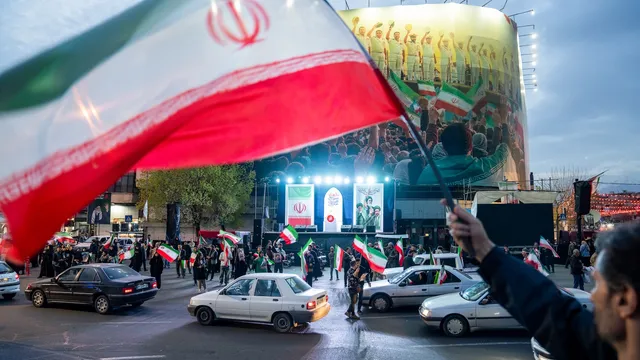
On Monday, Iran announced that the Strait of Hormuz will remain closed until President Trump gives in to a list of demands, which include lifting the U.S. naval blockade and sanctions, withdrawing American forces from around the country, paying war reparations, releasing frozen Iranian assets, and ending attacks on Iran's allies in the region. This announcement came amid an ongoing conflict between the U.S. and Iran, which began with U.S. and Israeli military actions. The closure of the strait, a critical oil shipping route, has significant global economic implications, especially as U.S. oil reserves have hit a new low.
Trump, eager to claim victory in the war he started alongside Israel, might be willing to walk away without a nuclear deal, according to unnamed U.S. officials. He has made his own demands, including compensation for 18 U.S. service members killed since the war began, and in a Truth Social post, he also demanded compensation for Iranian protestors killed over the last 50 years. However, Iran's strategy appears to be to drag out negotiations past the midterms, with the expectation that Republicans will face electoral losses due to high gas prices and the unpopular war.
A senior adviser linked to Iran's parliament, Majid Shakeri, has urged Iranian leaders to avoid both open war and a definitive agreement with Trump, arguing that the best strategy is to wait until the end of Trump's term on January 20, 2029. This waiting strategy could backfire, as a potential Tucker Carlson win in 2028 might not be favorable for Iran. Meanwhile, the U.S. Strategic Petroleum Reserve fell by 6.1 million barrels to just under 300 million barrels last week, the lowest since 1983, highlighting the economic strain of the conflict.
The war is clearly unsustainable for the U.S. in the long term, and the U.S. may have to bow out sooner rather than later. The Department of Energy's announcement about the SPR, along with a recent jobs report showing the economy faring poorly under Trumponomics, has led many to compare Trump to Jimmy Carter, who faced economic challenges and a stalemate with Iran during the 1979-1980 hostage crisis. However, this level of incompetence is in a league of its own, and the consequences of the war are being felt by Americans and Iranians alike.

Comprehensive report
Full story,
in detail.
Trace the developments that led here, see how the story evolved, and understand the forces and wider context surrounding it.