
Topic overview
Briefly
- Over 1.1 million independent voters in NYC cannot vote in the Democratic primary.
- The Democratic primary winner is almost guaranteed to win the general election.
- More than 80% of large US cities use an open primary system.
What happened
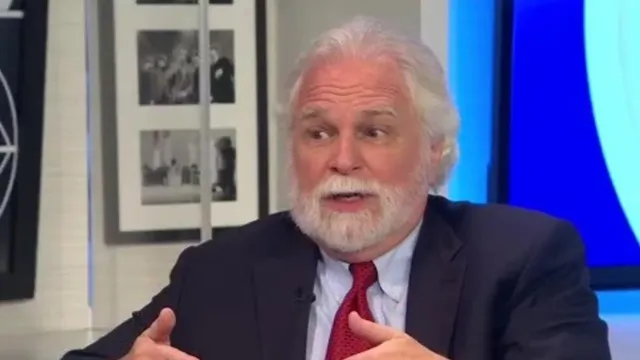
Randy Mastro, a former federal prosecutor and veteran of two New York City administrations, appeared on The Point with Marcia Kramer to discuss his legal challenges against Mayor Zohran Mamdani's administration. Central to his argument is a lawsuit advocating for open primaries in New York City. Mastro contends that the current closed primary system disenfranchises a massive segment of the electorate, specifically the approximately 1.1 million registered independent voters who are barred from participating in Democratic primaries. In a city where the Democratic primary winner is virtually guaranteed victory in the general election, this exclusion means that over a million citizens have no meaningful say in selecting their mayor. Mastro framed this as a fundamental failure of local governance, arguing that municipal responsibilities like sanitation are non-partisan and should not be subject to a system that only caters to a party's base.
Mastro provided a comparative analysis to support his position, noting that more than 80 percent of major U.S. cities with populations exceeding 500,000 have already adopted open primaries. He invoked the legacy of Fiorello LaGuardia, whom he called New York's greatest mayor, to underscore the principle that effective city management transcends party politics. According to Mastro, the current system incentivizes a mayor to govern solely for their partisan base, which he described as the antithesis of good local government. The discussion also touched upon the practical outcomes of this political structure, with Manhattan Assemblyman Tony Simone joining the program to compare the Mamdani administration's handling of issues like homeless encampments to that of former Mayor Eric Adams, suggesting that the closed primary system has tangible consequences for city policy and management.
The mechanism of disenfranchisement, as Mastro explained, is rooted in the overwhelming Democratic dominance in New York City. Because the general election is largely a formality, the real contest occurs in the Democratic primary, where turnout is typically very low. A candidate who secures the Democratic nomination, such as Mayor Mamdani, becomes the presumptive frontrunner and almost certain winner. This process effectively sidelines the 1.1 million independent voters who, by choosing not to register with a party, are locked out of the only election that matters. Mastro's lawsuit seeks to dismantle this structure, arguing that it creates a two-tiered system of voters and undermines democratic representation at the most basic level of city government.
The broader implications of Mastro's advocacy touch on the nature of urban governance and political reform. By highlighting the contrast between New York City and the vast majority of other large American cities, the argument for open primaries is positioned not as a radical change but as an adoption of a widely accepted best practice. The appearance on The Point served as a platform to connect this legal and political effort to everyday city life, from garbage collection to homelessness, framing the primary system not as an abstract electoral issue but as the root cause of a government that is unresponsive to the full spectrum of its citizens. The conversation with Assemblyman Simone further grounded the debate in current policy outcomes, creating a direct line between electoral rules and the quality of life in the city.

Comprehensive report
Full story,
in detail.
Trace the developments that led here, see how the story evolved, and understand the forces and wider context surrounding it.