
Topic overview
Briefly
- Rev Paul Cawthorne identified toxic waste sites linked to Monsanto in Shropshire, Herefordshire, and
- Testing found dangerously elevated PCB levels at nine of ten sites discussed in BBC's Buried series.
- Cawthorne calls for new investigation; council says no evidence of toxic waste at Stoneyhill.
What happened
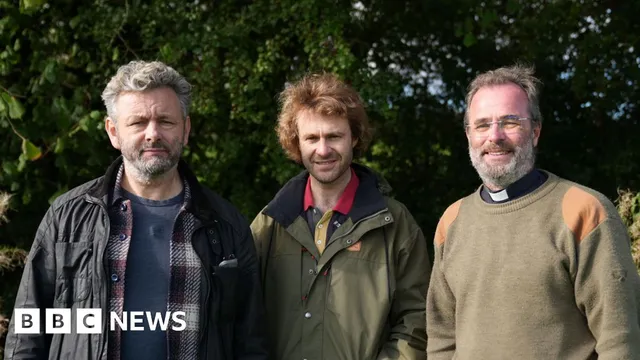
Rev Paul Cawthorne, a priest in charge of churches in the Hadnall area of Shropshire, England, has spent two decades investigating the environmental legacy of chemical giant Monsanto. His work has culminated in a documentary featuring Hollywood actor Michael Sheen, who sought Cawthorne's help to identify sites where toxic waste was dumped in the 1970s. Cawthorne's investigation began when he learned about the Monsanto chemical dumping at Stoney Hill, a former landfill site in Telford, Shropshire, where Monsanto legally dumped waste between 1985 and 1988, while the site was managed by Shropshire County Council. He subsequently identified two other sites: Sutton Walls in Herefordshire and Cefn Mawr in north Wales. Cawthorne's research was featured in the BBC radio series 'Buried', which discussed ten sites across the UK. Testing at nine of these sites found 'dangerously elevated levels' of polychlorinated biphenyls (PCBs), toxic man-made chemicals that do not easily break down in nature. Cawthorne stated that the results at some sites were 'literally off the scale' and would have a significant impact in professional circles, making it difficult for authorities to continue ignoring the issue. The details of Monsanto's involvement at Stoney Hill were revealed through a recent Freedom of Information request. Cawthorne has called on Telford and Wrekin Council, the current site owners, to order a full fresh statutory investigation into the former landfill site near Coalbrookdale. The council, which took over management of the site in 1998, maintains that there is 'no evidence in the records received from Shropshire County Council that toxic materials or waste were tipped in Stoneyhill landfill.' The council also states that regular testing has not identified any cause for concern, and that a detailed assessment by the Environment Agency in 2008 concluded the site is not considered a harm to the local environment. Cawthorne's documentary focuses on Monsanto's former activities, which included producing a range of chemicals at factories in Newport, south Wales, and Ruabon, near Chirk, before disposal legislation began to tighten in 1974. The documentary aims to shed light on the long-term environmental and health impacts of industrial chemical dumping, and Cawthorne's persistence in seeking accountability from authorities.

Comprehensive report
Full story,
in detail.
Trace the developments that led here, see how the story evolved, and understand the forces and wider context surrounding it.