
Topic overview
Briefly
- The total solar eclipse on August 12, 2026, will be visible in parts of Greenland, Iceland, and northern Spain.
- In the U.S., Fairbanks, Alaska, will experience the highest totality at 37%, while other cities will see lesser percentages.
- This event is the only total solar eclipse of 2026, making it a significant occasion for viewers across the Northern Hemisphere.
What happened
On August 12, 2026, the only total solar eclipse of the year will take place, captivating audiences across parts of the Northern Hemisphere. The path of totality will traverse regions in Greenland, Iceland, and northern Spain, providing a unique opportunity for millions to witness this astronomical event. In the United States, viewers will experience a partial eclipse, with Fairbanks, Alaska, seeing the most significant coverage at 37% totality. Other cities, including Boston, New York City, Toronto, and Philadelphia, will see lesser percentages of totality, ranging from 16% to 7%.
The eclipse will begin its journey across the Northern Hemisphere, with totality expected to last for about two minutes in the areas directly in its path. In Iceland, the peak of the eclipse will occur at 5:48 p.m. local time in Reykjavík, while northern Spain will experience totality around 2:30 p.m. local time. The eclipse will also be visible in the United Kingdom, where London will reach a maximum of 91% coverage at 2:13 p.m. ET. For those in North America, the partial eclipse will be most prominent in Fairbanks at 8:27 a.m. local time, with other cities experiencing their peak moments shortly after.
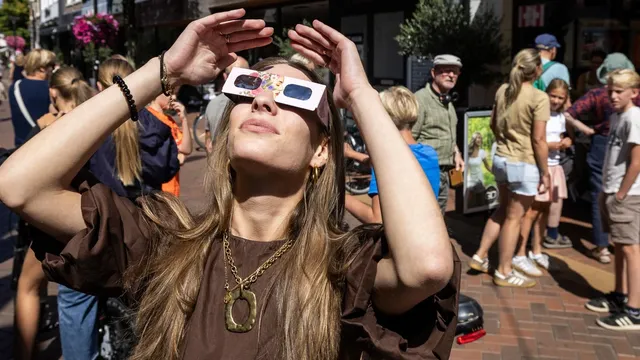
As the moon passes in front of the sun, it will create a moment of darkness, prompting viewers to don protective glasses to avoid eye damage during the partial phases. This event is particularly significant as it marks the only total solar eclipse of 2026, drawing attention from astronomy enthusiasts and casual observers alike. The next total solar eclipse visible in the United States will not occur until 2044, making this event a rare opportunity for many.
The excitement surrounding the eclipse is palpable, as people prepare to gather in locations along the path of totality to witness this celestial phenomenon. The anticipation builds as communities plan events and gatherings to celebrate the occasion, highlighting the cultural and scientific importance of solar eclipses. As the date approaches, many are reminded of the beauty and wonder of the universe, making this eclipse a moment to cherish and remember.

Comprehensive report
Full story,
in detail.
Trace the developments that led here, see how the story evolved, and understand the forces and wider context surrounding it.