
Topic overview
Briefly
- Ukraine's deep strikes previously relied on drones and cruise missiles, which are easier for Russia’
- A domestic ballistic missile capability would make Ukrainian strikes much harder for Russian forces
- A Ukrainian manufacturer called Fire Point is developing the missiles and conducted a launch test in
What happened
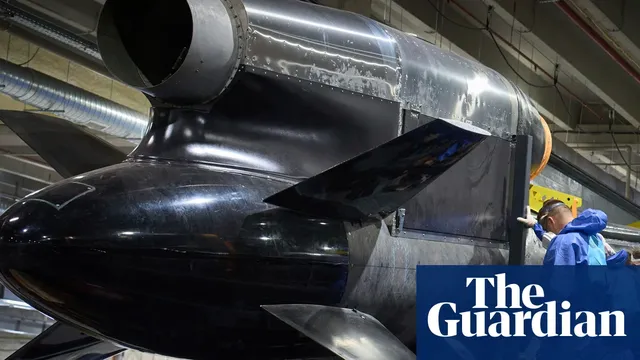
In a recent interview with CBS News, former Ukrainian defence minister Mykhailo Fedorov provided a significant timeline regarding Ukraine's domestic weapons capabilities. He estimated that Ukraine could be capable of striking targets within Russia using domestically produced ballistic missiles within a timeframe of three to six months. This development would mark a major shift in Ukraine's strategic capabilities, as its deep strike operations have so far relied predominantly on long-range drones and cruise missiles. The introduction of ballistic missiles into Ukraine's arsenal would present a much more complex challenge for Russian air defence systems, which find ballistic projectiles considerably harder to intercept and thwart compared to slower-moving drones or cruise missiles. Fedorov, who was a key architect of Ukraine's highly successful drone program before his controversial dismissal in July, emphasized the technological race between the two nations, stating the necessity to defeat Russia in every technological cycle. He also cautioned that Russia is not standing still and is advancing its own capabilities rapidly. The domestic development of these missiles is being spearheaded by a Ukrainian defence manufacturer named Fire Point, which reportedly conducted a launch test as early as June, indicating the program is in an advanced stage of development.
Concurrently, the conflict has seen a dramatic escalation in long-range drone warfare. Ukraine launched what Russian authorities described as one of the most massive drone attacks since the war began. The Russian defence ministry claimed to have shot down an unprecedented 1,478 Ukrainian drones within a single 24-hour period. This swarm of drones caused a significant fire at a Wildberries distribution warehouse located near Moscow and resulted in the deaths of at least six people, according to Russian officials. Beyond the capital region, the Ukrainian military confirmed a successful strike on a strategically important target in Russia's Rostov region: a missile fuel production facility. This plant is responsible for manufacturing solid rocket propellant used in multiple launch rocket systems and a variety of missile and airborne weapon systems, making it a high-value target for disrupting Russian military logistics and offensive capabilities.
The spillover effects of the intensified drone war are being felt beyond the borders of the direct combatants. A security incident occurred on Nato's eastern flank when a drone breached Romanian airspace near the border with Ukraine and Moldova. The drone had entered Romanian territory from Moldova. In response, a Spanish F-18 fighter jet, operating as part of Nato's air policing mission, was scrambled and successfully intercepted and shot down the unmanned aircraft. This incident, confirmed by the Romanian defence ministry, underscores a growing pattern of drones from the war zone inadvertently or intentionally crossing into the airspace of Nato member states, raising the risk of a wider confrontation.
On the ground in Ukraine, Russian forces continued their campaign of strikes against civilian and industrial infrastructure. A barrage of Russian drones and missiles targeted the city of Kryvyi Rih, the hometown of President Volodymyr Zelenskyy. The attack killed two people and wounded fourteen others at the ArcelorMittal steel plant, one of the country's largest steel producers. The facility was forced to partially halt its operations due to the damage. Among the destruction, a local bookseller named Dmytro Semenukha saw all four of his book stalls completely incinerated. President Zelenskyy commented on the attack, stating that Russian forces strike civilian infrastructure wherever their ballistic missiles can reach, highlighting the persistent threat to non-military targets across the country.

Comprehensive report
Full story,
in detail.
Trace the developments that led here, see how the story evolved, and understand the forces and wider context surrounding it.