
Topic overview
Briefly
- Marineland of Canada in Niagara Falls suddenly closed, leaving 30 beluga whales needing new homes.
- An international, multi-institutional rescue mission was launched to rehome all 30 whales.
- The two rescued whales will remain behind the scenes to acclimate before joining the resident pod.
What happened
The relocation of Balor and Zephyr is a small but significant part of a much larger, internationally coordinated animal rescue operation. The sudden closure of Marineland of Canada in Niagara Falls created an urgent need to find new homes for a substantial population of marine mammals, including 30 beluga whales. This type of large-scale rescue is logistically complex, requiring specialized transport, veterinary care, and the cooperation of accredited facilities across borders. The successful transfer of these two whales demonstrates the initial phase of this plan is working, but the overarching mission to rehome the remaining 28 belugas is a monumental task that will likely take months or even years to complete. The closure of a facility like Marineland often leaves animals in a precarious state, and the rapid mobilization of an international network of aquariums and marine parks is critical to prevent a worse outcome for the animals involved.
The arrival of Balor, age 10, and Zephyr, age 7, at the Georgia Aquarium initiates a carefully managed acclimation process. They are not immediately introduced to the public or the aquarium's existing beluga pod. Instead, they are placed in a behind-the-scenes habitat where they can recover from the stress of transport and begin to bond with their new trainers. This quarantine and acclimation period is standard practice to monitor their health, allow them to adjust to a new environment, and establish a routine. The ultimate goal is to gradually integrate them with the resident belugas, a delicate social process that requires expert oversight. The aquarium's existing pod will eventually become the permanent social group for these rescued animals.
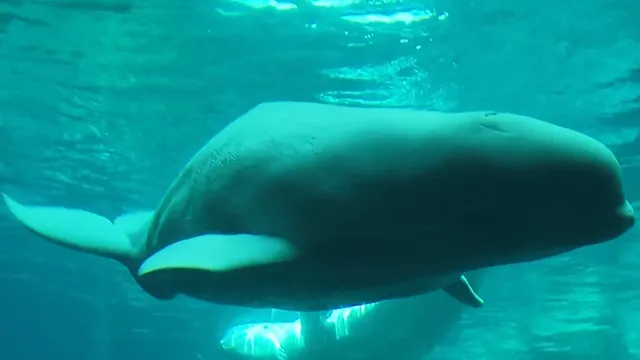
Beluga whales possess unique biological adaptations that make their care particularly specialized. As an Arctic species, they are adapted to cold-water environments, a condition that must be meticulously replicated in their new habitat. A key physiological feature is the absence of a dorsal fin, an evolutionary adaptation that allows them to navigate easily under sea ice and reduces heat loss in frigid waters. This lack of a dorsal fin is a defining characteristic of the species. The Georgia Aquarium, with its established beluga whale program, has the necessary infrastructure and expertise to provide the cold-water environment and specialized veterinary care these animals require, making it a suitable sanctuary for Balor and Zephyr.
The broader context of this rescue highlights the ongoing ethical and practical challenges surrounding marine mammals in human care. The closure of Marineland of Canada, a long-standing but controversial facility, forced a critical decision point for the fate of dozens of animals. The international rescue mission represents a commitment by the zoological and aquarium community to provide a continued life of care for these whales, who cannot simply be released into the wild after a lifetime in captivity. The success of this mission will be measured not just by the safe transport of the animals, but by their long-term health, social integration, and overall welfare in their new homes. The story of Balor and Zephyr is an early, hopeful chapter in what will be a long and complex narrative of rescue and rehabilitation.

Comprehensive report
Full story,
in detail.
Trace the developments that led here, see how the story evolved, and understand the forces and wider context surrounding it.