
Topic overview
Briefly
- Trump cited his good relationship with Kim Jong Un as a reason to reduce the drills.
- South Korea declined a U.S. request to help with the denuclearization of Iran.
- The Ulchi Freedom Shield exercises were set to begin with 18,000 South Korean troops.
What happened
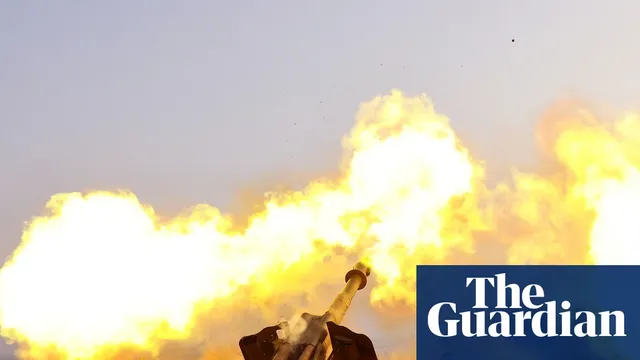
On Sunday, August 16, 2026, President Donald Trump announced via his Truth Social platform that he had directed Defense Secretary Pete Hegseth to substantially scale back the upcoming joint military exercises between the United States and South Korea. The exercises, known as Ulchi Freedom Shield, were scheduled to commence on Monday, August 17, and involve approximately 18,000 South Korean soldiers. Trump stated that while it was too late to cancel the drills entirely, he was "not happy" with the long-standing agreement for the U.S. to participate. The president's decision was rooted in multiple factors, including his personal rapport with North Korean leader Kim Jong Un, the financial cost of the exercises, and South Korea's refusal to assist in the denuclearization of Iran.
The president's announcement represents a significant shift in the U.S.-South Korea military alliance, which has long viewed these annual exercises as a cornerstone of regional deterrence against North Korean aggression. Trump characterized the drills as sending a "totally inappropriate and hostile" signal to North Korea, a country he described as "unthreatening and respectful" during his presidency. This is not the first time Trump has sought to curtail these exercises; during his first term, following his 2018 summit with Kim Jong Un in Singapore, he similarly announced a halt to "war games," citing their provocative nature and the financial burden on the United States. The exercises were subsequently reconfigured into smaller-scale operations in 2019 after a failed summit in Hanoi.
Trump's decision also linked the military drills to an unrelated geopolitical issue, revealing that he had recently asked South Korean President Lee Jae Myung to join U.S. efforts to denuclearize Iran, a request that was met with a "No thanks!" from Seoul. This connection underscores a transactional approach to alliances that has been a hallmark of Trump's foreign policy. The Ulchi Freedom Shield exercises, designed to enhance readiness against North Korean threats through complex scenarios including live-fire drills and equipment distribution, have been a frequent target of North Korean condemnation. Just days before Trump's announcement, North Korea's Foreign Ministry had issued a warning, describing the drills as a "rehearsal for an aggressive war" and threatening a stern response, rhetoric that often precedes an escalation in weapons testing by Pyongyang.
The implications of this directive are profound for regional security dynamics. Any reduction in the scale or scope of the exercises is likely to be interpreted by North Korea as a concession, potentially emboldening Kim Jong Un's regime, which has been deepening its military cooperation with Russia and continuing its banned ballistic missile program. Conversely, the move is expected to draw sharp scrutiny from defense officials in both the U.S. and South Korea, as well as from other regional allies like Japan, who view the drills as essential for maintaining stability on the Korean Peninsula. The Pentagon has not yet detailed how the exercises will be modified, but the president's instruction to "substantially reduce" them signals a potential weakening of the alliance's visible military posture at a time of heightened tensions, following North Korea's resumption of missile tests earlier in August.

Comprehensive report
Full story,
in detail.
Trace the developments that led here, see how the story evolved, and understand the forces and wider context surrounding it.