
Topic overview
Briefly
- Fauci refused a voluntary interview with Johnson's subcommittee after a contempt vote.
- His lawyers cited prior testimony and political harassment as reasons for refusal.
- Johnson vowed to explore legal options, including a possible subpoena.
What happened
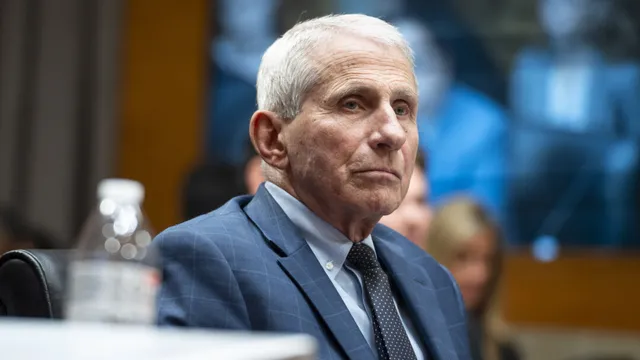
Dr. Anthony Fauci, the former director of the National Institute of Allergy and Infectious Diseases (NIAID), has declined a request to appear voluntarily before a second Senate panel, the Senate Permanent Subcommittee on Investigations, chaired by Senator Ron Johnson (R-Wis.). This refusal comes days after Republicans on the Senate Homeland Security and Governmental Affairs Committee voted along party lines to hold Fauci in contempt of Congress for invoking his Fifth Amendment right against self-incrimination more than 100 times during a July 29, 2026, hearing before that committee, chaired by Senator Rand Paul (R-Ky.).
In an August 14, 2026, letter to Johnson, Fauci's attorneys, David Schertler and Danny Onorato, stated that Fauci had already answered questions "honestly and transparently" during more than 200 congressional appearances over his 38-year career, including a two-day transcribed interview and public hearing before a House panel in 2024. They argued that any further appearance would serve no legislative purpose and would only "impermissibly harass or degrade Dr. Fauci for political purposes." The attorneys also noted that Fauci and his family had faced harassment and death threats since the July hearing, and they accused committee Republicans of joining a "years-long vindictive crusade" led by Senator Paul.
The attorneys further contended that the contempt referral, which Paul sent directly to the Department of Justice without a full Senate vote, did not satisfy statutory requirements for prosecution. They suggested that if the committee wanted a good-faith test of Fauci's Fifth Amendment claim, it could bring a civil action in federal court to compel his testimony. Fauci's lawyers indicated that he would again invoke the Fifth Amendment if compelled to appear.
Senator Johnson responded by stating that the American people deserve answers to legitimate questions about the federal government's "miserably failed response to COVID-19," and that some questions can only be answered by Fauci. Johnson noted that Fauci had previously said he was "very happy to testify before any congressional oversight committee" and had "nothing to hide," but now "apparently, he has a lot to hide." Johnson vowed to continue obtaining Fauci's records and to explore legal options, including the possibility of issuing a subpoena.
The dispute is part of a broader Republican investigation into Fauci's role in the COVID-19 pandemic, including the origins of the virus and the safety and efficacy of COVID-19 vaccines. Senator Paul has long accused Fauci of funding "risky" research that may have led to a lab leak of the virus from the Wuhan Institute of Virology. The committee has obtained more than 1,000 pages of Fauci's personal diary and a copy of his pandemic-era cellphone. Additionally, Florida Attorney General James Uthmeier has opened a state investigation into Fauci's "lack of candor to Congress."
The refusal has intensified the political battle over accountability for the pandemic response, with Republicans seeking to hold Fauci accountable and Fauci's legal team arguing that the investigations are politically motivated. The outcome of the contempt referral and any potential subpoena remains uncertain, as legal questions about the validity of the Fifth Amendment invocation after a presidential pardon are still unresolved.

Comprehensive report
Full story,
in detail.
Trace the developments that led here, see how the story evolved, and understand the forces and wider context surrounding it.