
Topic overview
Briefly
- Brooke Hacker, a 15-year-old with cerebral palsy, walked 812 steps using a robotic exoskeleton.
- Her parents expressed immense joy at witnessing this milestone for the first time.
- The success of the technology has led to calls for its availability across the UK.
What happened
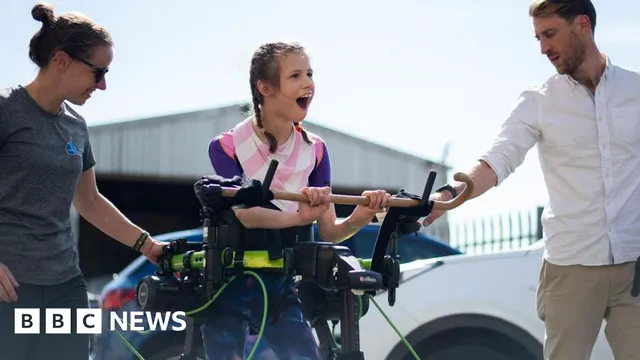
In the UK, a significant breakthrough occurred when 15-year-old Brooke Hacker, who has cerebral palsy, walked for the first time using a robotic exoskeleton. This event took place at the Equinox clinic in Cross Hands, Carmarthenshire, where the technology is being trialed. Brooke's parents, Andrew and Rebecca Hacker, expressed their overwhelming joy at witnessing their daughter achieve something they were told would never happen. The exoskeleton allowed Brooke to walk 812 steps, a remarkable increase compared to her usual 30 steps in a typical therapy session. This innovation not only provided a new experience for Brooke but also highlighted the potential of robotic technology in rehabilitation.
The exoskeleton, developed by Trexo Robotics, is designed to assist children in practicing walking patterns that are often difficult to achieve through traditional therapy methods. Mia Martin Evans, the lead pediatric physiotherapist at Equinox, noted the rapid advancements in technology and how it can enhance therapy programs. The emotional impact on families is profound, as seen with Brooke's parents, who described the experience as incredible and life-changing. They, along with other families, are advocating for the technology to be made available nationwide, emphasizing the importance of accessibility for all children with mobility challenges.
Another family, Carys and Marc Bowen, also experienced a similar moment of joy when their three-year-old son, Hopcyn, who has spastic quadriplegic cerebral palsy, walked for the first time. Carys reflected on the uncertainty they faced regarding Hopcyn's ability to walk independently, making the experience bittersweet yet hopeful. The Trexo technology was only at the clinic for a short time, but it provided a glimpse into the possibilities for their son's future. Carys expressed a desire for continued progress, stating that they would not give up on Hopcyn's ability to walk.
The stories of Brooke and Hopcyn illustrate the transformative power of technology in the lives of children with disabilities. As families witness their children achieving milestones that were once thought impossible, the demand for such innovations in therapy is likely to grow. The emotional and psychological benefits of these experiences extend beyond physical mobility, fostering hope and resilience in both children and their families. The ongoing development and availability of robotic exoskeletons could pave the way for a new era in pediatric rehabilitation, where more children can experience the joy of walking.

Comprehensive report
Full story,
in detail.
Trace the developments that led here, see how the story evolved, and understand the forces and wider context surrounding it.