
Topic overview
In brief
- Research shows aspen trees can act as a natural buffer against wildfires.
- Aspen stands are more resistant to fire compared to coniferous trees.
- Planting more aspen trees could be an effective strategy for protecting communities from wildfires.
Summary
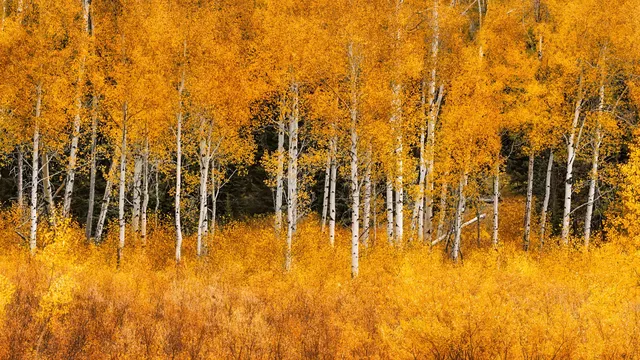
In Canada, researchers have found that aspen trees can serve as a natural buffer against wildfires, particularly as fire seasons become more intense due to climate change. Flavie Pelletier, a doctoral student at McGill University, conducted a study that combined satellite maps of wildfires from recent years with data on dominant tree species in Canadian forests. The research revealed that aspen trees were more prevalent at the edges of fire zones compared to inside them, indicating their effectiveness in slowing fire spread. This study was published on June 15 in the journal Forest Ecology and Management.
The findings suggest that areas dominated by aspen trees burn less intensely than those with coniferous trees like spruce and pine. While individual aspen trees may burn easily due to their thin bark, large stands of aspen are more resistant to fire. This resilience is attributed to several factors, including the high moisture content in aspen leaves, the absence of highly flammable resin, and the height of the leaves, which helps prevent fire from spreading to the canopy. The research highlights the potential for planting more aspen trees as a strategy to protect communities from increasingly destructive wildfires.