
Topic overview
In brief
- Phil Collins, a Wiltshire vegetable farmer, reports significant crop failures due to severe drought conditions.
- In contrast, winemakers like Sandy Luck are thriving, benefiting from increased sugar content in grapes.
- The ongoing climate change is leading to more frequent hot and dry summers, prompting farmers to adapt their practices.
Summary
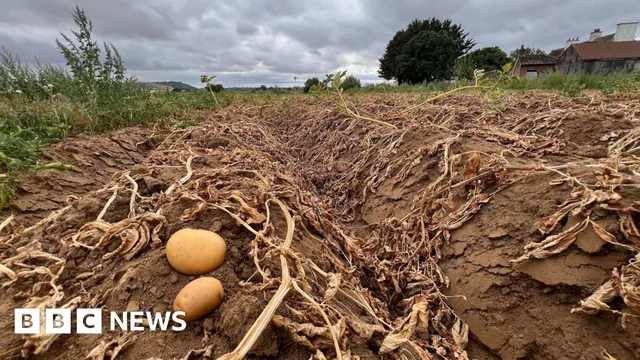
In the West of England, particularly Wiltshire, farmers are facing severe challenges due to an ongoing drought that has significantly impacted vegetable crops. Phil Collins, a local vegetable farmer, has reported unprecedented difficulties, stating that he has never had an overdraft until this year. His cauliflowers, which typically thrive in the region, have suffered greatly, with six thousand plants drying up and failing to produce. The drought has also affected other crops, such as potatoes, which are shriveling in the fields. Collins noted that even drought-resistant varieties like Marfona potatoes have struggled to survive the extreme conditions.
Conversely, winemakers in the region are experiencing a boom as the dry weather has proven beneficial for grape production. Sandy Luck, who operates the Aldwick Estate vineyard in North Somerset, explained that the increased sunlight leads to higher sugar content in the grapes, resulting in wines with greater alcohol content and improved quality. The vineyard has been able to produce a wider variety of wines, including those in the French style, and has received numerous awards for its Somerset vintages. This shift in agricultural success highlights the contrasting impacts of climate change on different types of farming.