
Topic overview
Briefly
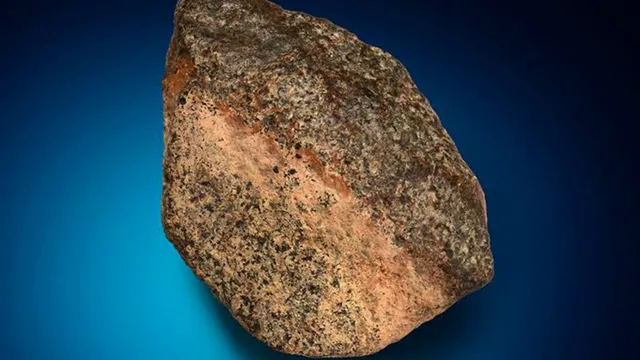
- The Teghaza 001 meteorite, discovered in Mali in 2022, is believed to be at least 4.1 billion years old.
- Research indicates that Mars may have had geological processes similar to Earth's, despite lacking tectonic plates.
- These findings suggest that Mars was losing its atmosphere rapidly, raising questions about its past habitability.
What happened
In 2022, a significant discovery was made in Mali when the Teghaza 001 meteorite was recovered. This meteorite, weighing 28 ounces (800 grams), is believed to be the oldest known rock from Mars, with an age determined to be at least 4.1 billion years. Researchers utilized various methods to measure radioactive decay in minerals within the meteorite, including tiny zircon crystals, to establish its age. The findings suggest that Mars may have had geological processes similar to those on Earth, despite lacking tectonic plates.
The Teghaza 001 meteorite is rich in silica, indicating that Mars might have produced a form of granite, a rock type typically associated with tectonic activity on Earth. This challenges previous assumptions about Mars' geological history, as the planet's surface is primarily composed of basalt, a volcanic rock formed from rapidly cooled lava. The implications of this discovery extend to understanding the planet's past habitability and the conditions that may have existed on early Mars.
In addition to its geological significance, the meteorite has provided insights into Mars' hydrological evolution. A study published in June 2023 traced the hydrogen content in Teghaza 001 and compared it with younger Martian meteorites. The results indicated that Mars lost a substantial portion of its atmosphere, including hydrogen, to space within a few hundred million years after the solidification of its magma ocean. This suggests that the planet was already experiencing significant atmospheric loss by 4.1 billion years ago, raising questions about its ability to support life.
The research surrounding Teghaza 001 is ongoing, and while it has provided valuable information about Mars' history, scientists caution that conclusions are based on a single meteorite. Further studies and additional samples will be necessary to build a more comprehensive understanding of Mars' geological and atmospheric evolution. The findings from this meteorite not only enhance our knowledge of Mars but also contribute to the broader search for habitable conditions on other celestial bodies in the universe.

Comprehensive report
Full story,
in detail.
Trace the developments that led here, see how the story evolved, and understand the forces and wider context surrounding it.