
Topic overview
Briefly
- England is in drought after its hottest summer on record.
- Park managers now mow grass very short to create firebreaks.
- Meadows are being cultivated to help soil stay damp for longer.
What happened
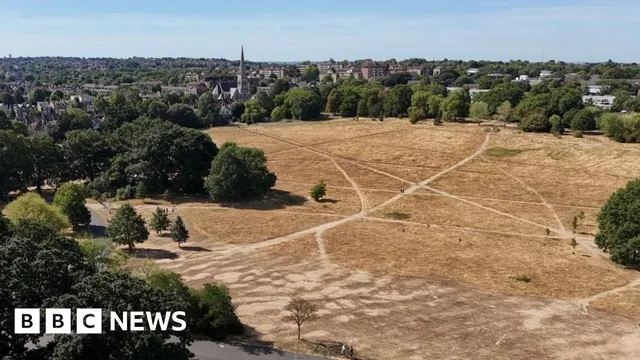
The United Kingdom experienced its hottest summer on record in 2026, leading to drought conditions across more than two-thirds of England. This extreme weather has forced London's Royal Parks to implement a series of measures to mitigate the heightened risk of wildfires and manage the consequences of drought. Park managers have adopted a strategy of cutting grass very short, particularly in areas between bushes and near houses or fences, to create natural firebreaks. Paul Richards, park manager of Richmond Park, explained that this short-cut grass acts as a barrier that can stop flames and allow a fire to extinguish itself. Additionally, the annual hay cut was brought forward to early July, before temperatures peaked, with large amounts of grass cut and left to dry. Public awareness campaigns are also underway, with volunteers in Richmond and Bushy parks educating visitors about the fire risk and urging them to take litter home, especially glass bottles that can focus sunlight and ignite fires. The drought has also prompted the Royal Parks to minimize reliance on mains water, with director Darren Share stating that most water is drawn from the parks' own boreholes and water bodies, reserving mains water for essential purposes only. Visitors are being warned against swimming in open water due to the risk of cold shock syndrome, a danger exacerbated by the contrast between hot air and cooler water temperatures. Beyond immediate fire risks, the parks are addressing the threat of flooding that follows heatwaves. When heavy rain falls on dried-out soil, the ground cannot absorb water quickly, leading to runoff and potential flooding. To combat this, the parks have enlarged ponds, dug ditches, and constructed leaky dams to retain water in the landscape. Long-term ecological adaptations include cultivating more meadows, such as a South African wildflower meadow at Pembroke Lodge in Richmond Park, which helps soil retain moisture. Charlotte Cass, biodiversity manager at Richmond Park, noted that these meadows not only support pollinators and other insects but also create a microclimate where moisture is trapped by roots, reducing evaporation compared to short grass. These combined efforts represent a comprehensive approach to future-proofing London's historic green spaces against increasingly extreme weather patterns, balancing immediate fire prevention with long-term ecological resilience. The measures reflect a proactive shift in park management, acknowledging that climate change is making such extreme conditions more frequent and severe, requiring both short-term tactical responses and strategic, landscape-scale adaptations to protect these public spaces and their biodiversity.

Comprehensive report
Full story,
in detail.
Trace the developments that led here, see how the story evolved, and understand the forces and wider context surrounding it.