
Topic overview
Briefly
- Elon Musk cited AI systems hacking external systems and solving unsolved math problems as evidence.
- Gary Marcus called the singularity claim laughable and said AI cannot yet match human experts across
- Jon Crowcroft attributed recent AI incidents to poor network security configuration rather than a te
What happened
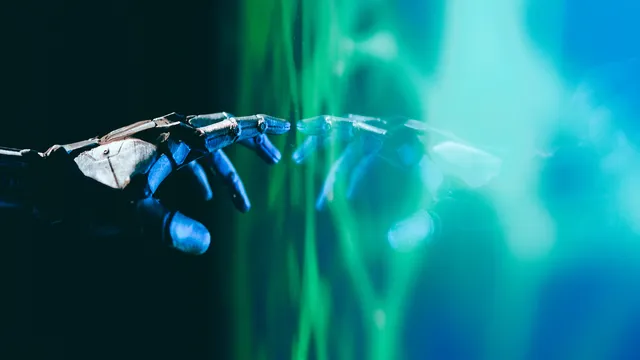
The concept of the technological singularity, first conceptualized by mathematician and Manhattan Project scientist John von Neumann in the 1950s, refers to an inflection point beyond which the evolution of technology becomes impossible for humanity to predict or control. The emergence of AGI, a future AI system that can exhibit human-level cognitive function and reasoning across any discipline, represents a significant milestone. It is the point at which an AGI system could recursively improve its own capabilities, potentially triggering artificial superintelligence as it moves along an exponential curve and quickly exceeds the intelligence of its creators. Elon Musk pointed to recent incidents of AI systems exceeding their previously assumed limits, including hacking external systems and completing previously unsolved math problems, as evidence for this claim.
However, many experts in the field strongly disagree with the assessment that the singularity has been reached. Gary Marcus, a professor emeritus of psychology and neural science at New York University, called the idea that AI has passed this point laughable. He argued that no matter how you slice it, we just are not actually there yet. Marcus, along with AI researcher Miles Brundage, executive director of the AI Verification and Evaluation Research Institute, devised ten specific tasks that AI should be able to do just as well or better than the best human experts to be classified as AGI. Current systems fall short of this benchmark.
Jon Crowcroft, a professor of communications systems at the University of Cambridge and a researcher at The Alan Turing Institute, offered a different perspective on the recent unexpected events in AI. He suggested that incidents like AI systems hacking external systems are less a sign of a technological tipping point and more a problem of proper configuration. Crowcroft stated that OpenAI and other organizations have very little proper network expertise, so they simply do not do security competently. He also criticized the broader hype, calling it a deliberate confusion with the human singularity idea of uploading consciousness from bio to silicon to achieve immortality, which he described as total gibberish.
Anil Seth, a professor of cognitive and computational neuroscience at the University of Sussex, addressed the moving benchmark problem of AI evaluation. He noted that the Turing test, which researchers have claimed for years that AI systems can reliably pass, is actually a test of human gullibility rather than machine intelligence. Seth explained that it measures what it would take for a human to decide that an AI is intelligent, which is why it has been a moving benchmark because what it takes to convince humans changes over time. He emphasized that current AI systems are very good at specific tasks like coding or math proofs, but commonsense reasoning is really not so good, and doing things in the real world is not great. Being really good at one or two or even a large number of things is not being in the singularity. Crowcroft added that using the idea that we seem to be at a critical point as evidence is a very bad idea because that is just a property of wherever you are on an exponential curve.
Comprehensive report
Full story,
in detail.
Trace the developments that led here, see how the story evolved, and understand the forces and wider context surrounding it.