
Topic overview
Briefly
- Netanyahu has stated that Israeli forces will not withdraw from Gaza until Hamas is genuinely disarmed.
- The 15-point peace plan proposed by Trump aimed for a phased withdrawal of Israeli troops in exchange for Hamas disarmament.
- Netanyahu's rejection of the plan complicates the peace process and raises concerns about renewed violence in Gaza.
What happened
In the ongoing conflict in Gaza, Israeli Prime Minister Benjamin Netanyahu has firmly rejected a 15-point peace plan proposed by U.S. President Donald Trump's Board of Peace. This rejection was articulated during a cabinet meeting, where Netanyahu emphasized that Israeli forces would not withdraw from Gaza until Hamas is completely disarmed. The plan, which was announced in late July 2025, aimed to facilitate a phased withdrawal of Israeli troops in exchange for Hamas surrendering its weapons. However, Netanyahu's stance highlights a significant disagreement over the sequence of disarmament and withdrawal, with Israel insisting on full disarmament before any troop movements occur.
The backdrop to this conflict includes a ceasefire agreement reached in October 2025, which halted major fighting and allowed for humanitarian aid to flow into Gaza. Despite this, tensions remain high, as both sides have differing interpretations of the terms of the ceasefire and subsequent agreements. Hamas has indicated that it would only begin disarmament if Israel first halts its military operations, creating a stalemate that complicates the peace process. Netanyahu's rejection of the plan comes at a politically sensitive time, as he is facing elections in October 2026 and is under pressure from hardline factions within his government.
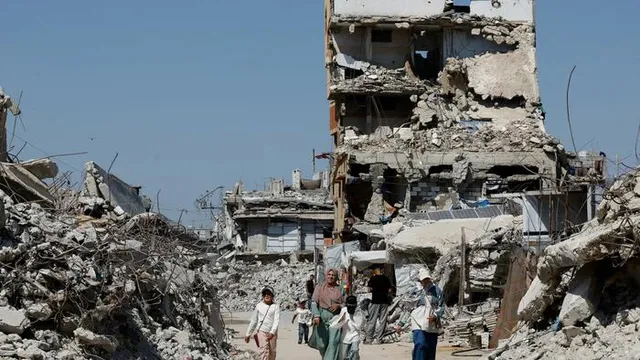
The implications of Netanyahu's rejection are significant, as it not only affects the immediate situation in Gaza but also the broader U.S.-Israel relationship. Trump's administration has been keen to broker peace in the region, and Netanyahu's public dismissal of the plan represents a rare divergence from U.S. policy. This situation has led to concerns about the potential for renewed violence in Gaza, as Israeli military operations have continued, resulting in civilian casualties and further destabilizing the region.
As the situation evolves, both Israel and Hamas remain entrenched in their positions, with Netanyahu's government unwilling to compromise on disarmament, while Hamas insists on Israeli commitments before any disarmament can take place. The ongoing conflict and the failure to reach a consensus on the peace plan underscore the complexities of the Israeli-Palestinian conflict and the challenges faced by international mediators in achieving a lasting resolution.

Comprehensive report
Full story,
in detail.
Trace the developments that led here, see how the story evolved, and understand the forces and wider context surrounding it.