
Topic overview
Briefly
- Shilo Sanders seeks to discharge an $11.89 million debt from a 2015 incident involving a school se
- Judge Romero noted Colorado's first game is the same week as the trial and said he does not care ab
- Deion Sanders may need to leave team preparations to testify in Denver if a deposition is not arran
What happened
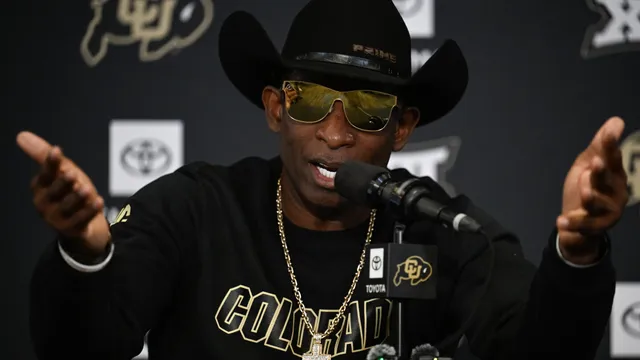
Deion Sanders, the head football coach at the University of Colorado, has been subpoenaed to testify in a federal bankruptcy case involving his son, Shilo Sanders. The trial is scheduled to begin on Monday, August 31, 2026, in Denver. This date falls during the same week as Colorado's first game of the 2026 season, which is set for Saturday, September 5, against Georgia Tech. The timing creates a direct conflict between Deion Sanders's professional responsibilities to his team and his legal obligation to appear in court.
The bankruptcy case stems from a 2015 incident at Shilo Sanders's school, where a security guard named John Darjean alleged that Shilo inflicted injuries on him while Darjean was attempting to confiscate Shilo's phone. Darjean later filed a lawsuit and won a default judgment of $11.89 million after Shilo failed to appear in court to defend himself. Shilo, who spent time with the Tampa Bay Buccaneers as an undrafted free agent, is now seeking to have this debt discharged through federal bankruptcy proceedings. The central legal question is whether the injury was a "willful and malicious injury," which would prevent the debt from being discharged under bankruptcy law.
During a pre-trial conference on August 14, 2026, Judge Michael E. Romero acknowledged the potential scheduling conflict. He noted that Colorado's first game is that same week and stated, "I can see that coming. I am not a CU alum or I have no ties to CU. So I don't care. But I'm just recognizing that is a potential issue." The judge's comments indicate an awareness of the competing demands on Deion Sanders's time but also a lack of willingness to automatically accommodate the football schedule. The situation is further complicated by the fact that Shilo was allegedly on the phone with Deion immediately before the 2015 incident occurred, making Deion's testimony potentially relevant to the case.
Deion Sanders has the option to file a motion to quash the subpoena, which would ask the court to invalidate the order requiring his testimony. Alternatively, the parties could arrange for Deion to provide testimony through a deposition outside of court, with the recorded testimony then played during the trial. However, this would require cooperation from both sides in the case. If neither side agrees to such an arrangement and the judge does not issue an order allowing remote testimony, Deion may be forced to take a break from his coaching duties, including practices and team meetings, to physically appear in the Denver courtroom. The outcome of this scheduling conflict remains unresolved as the trial date approaches.

Comprehensive report
Full story,
in detail.
Trace the developments that led here, see how the story evolved, and understand the forces and wider context surrounding it.