
Topic overview
Briefly
- President Trump signed an executive order that reduces the number of recommended childhood vaccines.
- The order suggests separating the MMR vaccine into three individual shots, contrary to scientific consensus.
- This decision has raised concerns among public health experts about the potential risks to children's health.
What happened
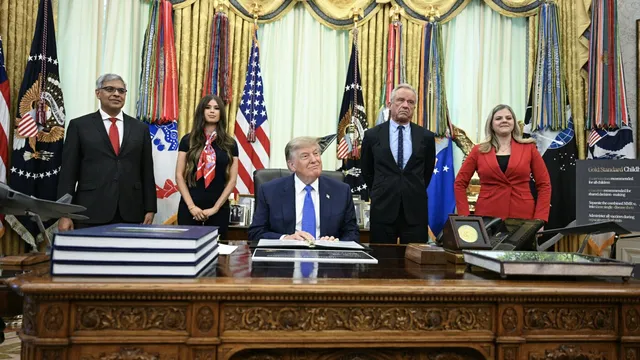
On August 10, 2026, President Donald Trump signed an executive order in the Oval Office that significantly alters the federal government's approach to childhood vaccinations. This order aims to reduce the number of vaccines recommended for children from 18 to 11, a move that aligns with previous efforts by Health and Human Services Secretary Robert F. Kennedy Jr. The executive order also suggests that the combined measles, mumps, and rubella (MMR) vaccine be administered as three separate shots, a recommendation that contradicts established scientific consensus. Trump's administration has been under pressure to address rising autism rates, which he linked to vaccination practices, despite extensive research disproving any connection between vaccines and autism. The order directs the Health and Human Services Department to reassess vaccine sequencing and timing within 90 days, indicating a shift in policy that could have significant implications for public health. The announcement comes at a time when the U.S. is experiencing a resurgence of measles cases, raising concerns among public health experts about the potential risks of reducing vaccination rates. Trump's decision has sparked controversy, as many medical professionals advocate for maintaining the current vaccination schedule to ensure herd immunity and protect vulnerable populations. The executive order is expected to face legal challenges, similar to previous attempts to alter vaccine recommendations, as many states rely on federal guidelines for their vaccination mandates. The implications of this order could affect not only the health of children but also the broader public health landscape in the United States.

Comprehensive report
Full story,
in detail.
Trace the developments that led here, see how the story evolved, and understand the forces and wider context surrounding it.