
Topic overview
Briefly
- A Vietnam Airlines Boeing 787-9 struck its tail on the runway during takeoff at Munich Airport.
- The flight circled for two hours, dumped fuel, and returned to Munich, where it was stranded on the
- Damage included a missing tail strike module, punctured tyres, and a fuselage puncture, with the
What happened
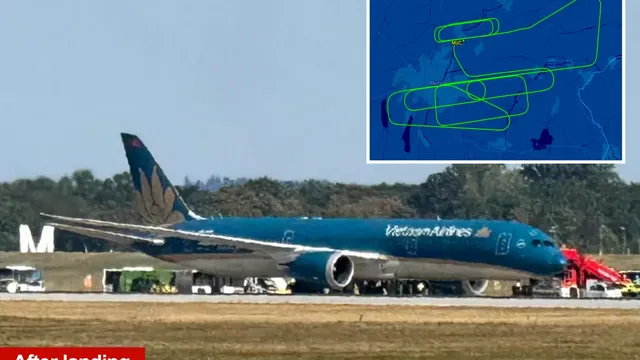
A Vietnam Airlines Boeing 787-9, operating flight VN-34 from Munich, Germany to Hanoi, Vietnam, experienced a serious incident during takeoff on a recent day. As the aircraft accelerated down the runway, its tail struck the pavement, producing a loud clunking noise and a large plume of dust. The plane managed to become airborne but was unable to continue its journey. The crew decided to return to Munich Airport as a precautionary measure, following standard procedures for such technical issues.
After climbing to about 9,000 feet, the aircraft circled over Munich for approximately two hours. During this time, it dumped fuel to reduce its landing weight, as shown by flight-tracking data from Flightradar24. The decision to dump fuel is a routine safety measure to ensure the aircraft can land within its maximum landing weight limits, reducing stress on the landing gear and brakes.
Upon landing back at Munich International Airport, the aircraft was unable to taxi off the north runway under its own power, leading to the closure of that runway. As a result, other flights were rerouted to the south runway, causing potential delays. The aircraft remained stranded on the runway until it could be towed away for inspection.
Photographs shared by aircraft engineer Fahad Naim on social media showed significant damage to the aircraft. He noted that the entire tail strike module was gone, there were punctured tyres, and a puncture through the lower fuselage with torn composite material and heavy scrape marks running aft. Naim speculated that a brake seizure or internal fault might have caused the incident, but he emphasized that it was too early to confirm the exact cause.
Vietnam Airlines issued a statement to Reuters confirming that the flight returned to its departure airport due to a technical issue. The airline assured that the flight crew followed all procedures and landed safely. All passengers and cabin crew members were safe. The aircraft is now being inspected, and the airline is coordinating with relevant authorities, including Munich Airport and aviation regulators, to determine the cause of the incident.
Munich Airport also confirmed the runway closure and the rerouting of flights. The incident highlights the importance of rigorous safety checks and the effectiveness of emergency procedures in aviation. While such events are rare, they underscore the need for continuous monitoring and maintenance of aircraft systems to prevent potential hazards.
The exact cause of the tail strike remains under investigation. Possible factors include mechanical failure, pilot error, or runway conditions. The investigation will likely involve analyzing flight data recorders, cockpit voice recorders, and maintenance logs. The outcome will be crucial for improving safety measures and preventing similar incidents in the future.
This incident occurred in Germany, a country with high aviation safety standards. The response by the crew and airport authorities was prompt and professional, ensuring the safety of everyone on board. The aircraft, a Boeing 787-9, is a modern wide-body jet known for its fuel efficiency and advanced technology. The damage sustained will require extensive repairs before the aircraft can return to service.
Passengers on the flight were likely rebooked on alternative flights or provided accommodations while the situation was resolved. The airline's priority is to ensure the well-being of its passengers and crew, as well as to maintain its reputation for safety and reliability. The incident serves as a reminder of the complexities and risks involved in aviation, and the constant vigilance required to mitigate them.

Comprehensive report
Full story,
in detail.
Trace the developments that led here, see how the story evolved, and understand the forces and wider context surrounding it.