
Topic overview
Briefly
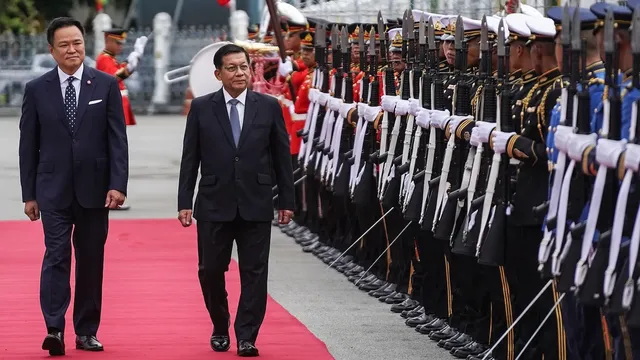
- Myanmar's junta leader Min Aung Hlaing visited Bangkok to strengthen ties and push for normalization with ASEAN.
- The visit included discussions on cooperation against transnational crimes and boosting bilateral trade with Thailand.
- Myanmar's parliament voted to reject the five-point consensus, complicating its diplomatic relations with ASEAN.
What happened
Myanmar has been navigating a complex diplomatic landscape since the military coup in 2021, which led to its leaders being excluded from ASEAN summits. Recently, junta leader Min Aung Hlaing visited Bangkok as part of a diplomatic effort to normalize relations with ASEAN, which has been a key supporter of this initiative. During this visit, discussions included cooperation on transnational crimes, pollution, and boosting bilateral trade with Thailand, where approximately 4 million Myanmar citizens work. However, many of the illicit activities occur in regions controlled by armed groups rather than the military government.
Despite some progress in ASEAN normalization, Myanmar's government has faced significant challenges. In July, as diplomatic breakthroughs seemed possible, Myanmar's parliament voted to formally reject the five-point consensus agreed upon by ASEAN leaders and Min Aung Hlaing. This consensus aimed to address violence in Myanmar, promote constructive dialogue, and provide humanitarian aid, but Myanmar's Foreign Ministry rebuffed calls for a new approach during the ASEAN leader's summit in May. The situation remains tense as the junta seeks to regain legitimacy while facing internal and external pressures.
In the broader context, the Philippines is experiencing economic difficulties, with GDP growth dropping to 2.3 percent in the second quarter of 2026. The government attributes this slowdown to temporary factors, but the reliance on imported oil has led to inflation and reduced consumer spending. Meanwhile, Vietnam and Australia are diversifying their foreign policy strategies amid global uncertainties, indicating a shifting geopolitical landscape in Southeast Asia.
The recent developments highlight the ongoing complexities in Myanmar's relations with ASEAN and the region's economic challenges. As Myanmar continues to push for normalization, the rejection of the five-point consensus raises questions about the future of its diplomatic relations and the potential for stability in the region.

Comprehensive report
Full story,
in detail.
Trace the developments that led here, see how the story evolved, and understand the forces and wider context surrounding it.