
Topic overview
Briefly
- Delhi slum residents wash floors repeatedly and dampen clothes to cool homes during heatwaves
- Greenpeace India launched heat diaries project to capture community experiences beyond temperature
- Testimonies will be shared with policymakers to push for targeted heat protection measures
What happened
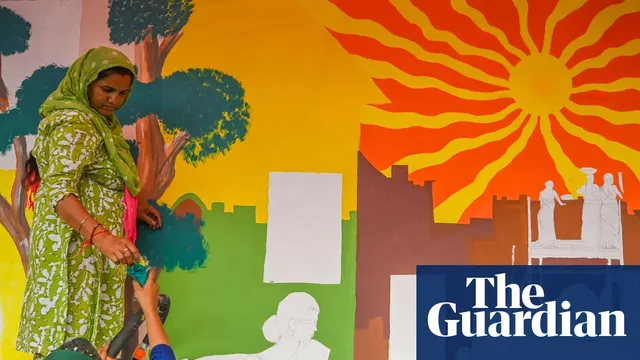
In the cramped quarters of Sunder Nagri, a slum in north-east Delhi, a unique documentation project is underway. Forty households are maintaining 'garmi khata' or heat registries, personal diaries that record their daily struggles against the city's intensifying heatwaves. This initiative, spearheaded by Greenpeace India, aims to capture the human experience of extreme heat that meteorological data alone cannot convey. The project represents a shift from purely scientific measurement to community-driven evidence gathering, where residents become their own storytellers and create testimonies of survival.
The living conditions described in these diaries paint a stark picture of heatwave survival. Gulshan, a mother of four, washes the floor of her single-room home multiple times daily to cool it enough for her children to sleep. Her family saved to purchase a desert cooler, a more affordable alternative to air conditioning that uses evaporation, but they use it sparingly to manage energy costs. Even with the cooler running, Gulshan must dampen her children's clothes before bedtime. Arshi, a 19-year-old distance-learning student at Delhi University living with five family members in one room, documents how she must return home to help her sister and mother despite her studies. Her small brick house becomes extremely humid after rains, and the combination of heat and humidity leaves everyone sweating profusely. Raja, a 21-year-old street vendor selling vegetables from a pushcart, endures temperatures reaching 45C during peak summer months. As Delhi's day and night temperature gap narrows annually, residents like Raja find no respite even after sunset, forcing him to sleep on the roof from May onwards just to feel some air.
The heat diaries project emerged from a recognition that existing heat action plans, which cities across India have begun formulating in recent years, lack crucial human data. Nibedita Saha, a Greenpeace India researcher, noted that while meteorological data on heat exists, what is absolutely missing is the community perspective—what people feel and experience. Aakiz Farooq, a senior campaigner at the organization, explained that the team contemplated how best to encapsulate these experiences and arrived at the idea of residents becoming their own storytellers, writing their own evidence and testimonies. The diaries are comprehensive journals covering daily routines, work, home conditions, mood, and family life, designed to provide a holistic view of how extreme heat affects every aspect of slum dwellers' existence.
The implications of this documentation extend beyond mere record-keeping. The collected testimonies are intended to serve as evidence for policy advocacy. Greenpeace India plans to share these personal accounts with ministries, policymakers, and members of parliament to push for more targeted measures to protect vulnerable populations from extreme heat. The underlying argument is that workers like Raja could be better protected by public policy if authorities understood their experiences at a micro-level and established systems to provide compensation. The project also highlights a broader issue in disaster management: heatwaves have been recognized as disasters, yet the planning response remains largely technical and meteorological rather than human-centered. By giving voice to those most affected, the heat diaries challenge the conventional approach to heat action planning and demand that policy responses account for the lived realities of India's urban poor.

Comprehensive report
Full story,
in detail.
Trace the developments that led here, see how the story evolved, and understand the forces and wider context surrounding it.