
Topic overview
Briefly
- Microsoft has 2.2 million AI chips installed, far fewer than the 4 million its energy capacity would
- The company has been building AI infrastructure since 2022 as part of a $280 billion expansion
- Electrical power availability and datacentre location near power sources are the main obstacles to
What happened
An investigation by the Guardian has revealed a significant gap between Microsoft's public statements about its artificial intelligence infrastructure and the actual number of advanced chips it has in operation. Internal documents obtained by the newspaper indicate that Microsoft currently has 2.2 million AI chips installed, a figure that appears to contradict the company's claims of rapid expansion in this area. The technology giant has been engaged in a $280 billion expansion program for nearly two years, yet the number of operational chips suggests that progress may be considerably slower than the company's annual reports imply.
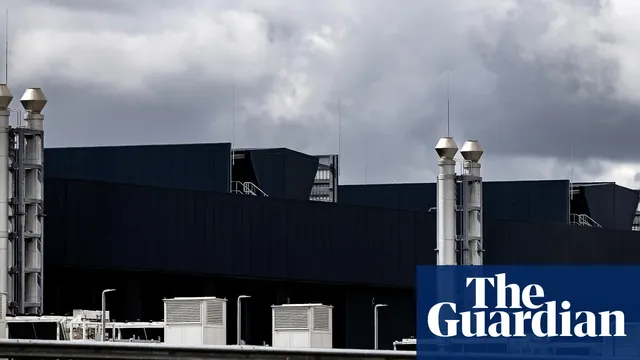
The chips that power AI systems are manufactured by Nvidia, one of the two most valuable companies in the world. Microsoft has publicly stated that it has been building AI infrastructure at breakneck speed over the past two years. However, the Guardian's analysis suggests that the company's newest datacentres may either not be fully operational or lack the necessary chips to function as intended. One method of estimating operational datacentres involves calculating the energy capacity at Microsoft's disposal, referred to as its AI capacity. Based on this approach, Microsoft's total capacity should be substantial given its construction efforts since 2022, potentially reaching 10 gigawatts. Even at a lower estimate, this would require approximately 4 million AI chips if the company had added 5 gigawatts of AI datacentres in the past two years. The fact that only 2.2 million chips are installed indicates a significant shortfall.
Industry analysts have expressed surprise at the figures. One analyst specializing in Nvidia stated that they would have expected Microsoft to possess more chips based on the company's public pronouncements. The discrepancy raises questions about the true state of Microsoft's AI build-out. The exact terms of Microsoft's commercial partnership with other entities are not publicly known, and some datacentre deployments may be accounted for through arrangements not reflected in the documents reviewed by the Guardian. This could partially explain the gap, but the overall picture remains one of slower-than-advertised progress.
The primary obstacle to faster expansion appears to be the availability of electrical power and the logistical challenge of constructing datacentres in proximity to power sources. A method for broadly approximating chip numbers involves dividing a datacentre's power usage by the power consumption of an individual AI chip, such as the H100. Microsoft's own sustainability report from 2024 indicates that 89 percent of electricity in its new datacentres powers IT systems, with an 11 percent overhead. However, not all chips in a datacentre are dedicated to AI, and companies like Microsoft often oversubscribe their power capacity, installing more chips than the IT capacity can technically support. This practice complicates efforts to precisely calculate the number of operational AI chips from power usage data alone.

Comprehensive report
Full story,
in detail.
Trace the developments that led here, see how the story evolved, and understand the forces and wider context surrounding it.