
Topic overview
Briefly
- The USS Abraham Lincoln crew has been at sea for more than 260 days.
- CENTCOM commander acknowledged mental health is a challenge for the crew.
- Rep. Don Bacon called for congressional oversight after the president downplayed concerns.
What happened
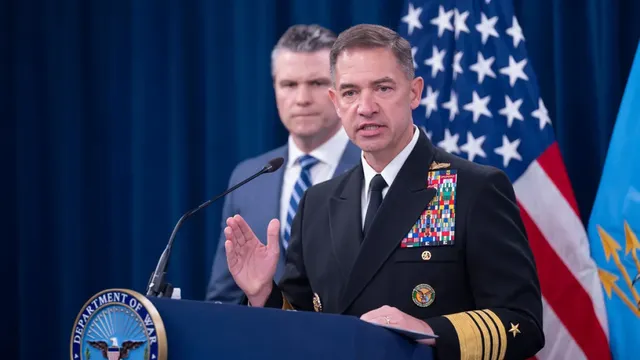
The crew of the USS Abraham Lincoln, an aircraft carrier deployed to the Middle East under CENTCOM command, has been at sea for more than 260 days, a deployment length that has raised significant concerns about the well-being of the sailors on board. CENTCOM commander General Michael Erik Kurilla visited the vessel during a 10-day trip to the region, which is experiencing boiling tensions with Iran. Following his visit, he released a statement that both praised the crew's dedication and courage while also candidly addressing the severe challenges they face. He specifically noted that mental health is a critical aspect of individual health that requires attention, on par with physical and spiritual health. Kurilla commended the ship's leadership, particularly the senior enlisted leaders in the Chief Petty Officers Mess, for making mental health and crew resilience a leadership priority. However, he was careful to state that the situation is not perfect, acknowledging that long-term service at sea is uniquely challenging and that every individual reacts to stressors differently.
The extended deployment has led to a cascade of problems beyond the psychological toll. Reports have emerged of supply shortages, water contamination, plumbing issues, and concerns about deck safety aboard the Lincoln. These material and logistical failures compound the stress on the crew, creating a difficult and potentially dangerous living and working environment. The situation has prompted military families to raise their concerns directly with the administration, seeking relief and answers for their loved ones. Their appeals, however, have been met with dismissiveness from the highest levels of government. President Donald Trump downplayed the significance of the nearly nine-month deployment, while War Secretary Pete Hegseth claimed the situation was completely misrepresented in the media, creating a disconnect between the official narrative and the reported reality on the ground.
This disconnect has drawn criticism from within the Republican party. Representative Don Bacon, a House Republican and Air Force veteran who served aboard an aircraft carrier, publicly took issue with the president's dismissive statement during an interview on CBS News's Face the Nation. Bacon argued that the president should have been more understanding of the families' concerns. Drawing on his own experience from 30 years ago, he recounted witnessing the severe mental toll that extended deployments take on service members, including suicide attempts during his time on board. He has called for congressional oversight on the matter, suggesting he wants to hear testimony from acting Navy Secretary Hung Cao and other military officials to investigate the conditions on the Lincoln and the broader impact of such prolonged deployments.
The Navy has officially admitted to a significant strain on deployed service members following the reports of worsening mental health, a stark acknowledgment of the crisis. The USS Abraham Lincoln's situation highlights a fundamental tension in naval operations: the strategic necessity of maintaining a forward presence in volatile regions versus the human limits of the sailors who execute those missions. The combination of an extended timeline far beyond a standard deployment, deteriorating material conditions on the ship, and a perceived lack of empathy from political leadership creates a perfect storm of stressors. The call for congressional oversight suggests that the Lincoln's ordeal may become a case study for reviewing deployment lengths, mental health support protocols, and the accountability of military and political leaders in safeguarding the welfare of service members.

Comprehensive report
Full story,
in detail.
Trace the developments that led here, see how the story evolved, and understand the forces and wider context surrounding it.