
Topic overview
In brief
- The leaders of Saudi Arabia, Turkey, and Pakistan met in Mecca to sign a joint defense agreement.
- The agreement states that an attack on one country will be viewed as an attack on all three.
- This pact aims to strengthen regional security and deter aggression amid rising tensions in the Middle East.
Summary
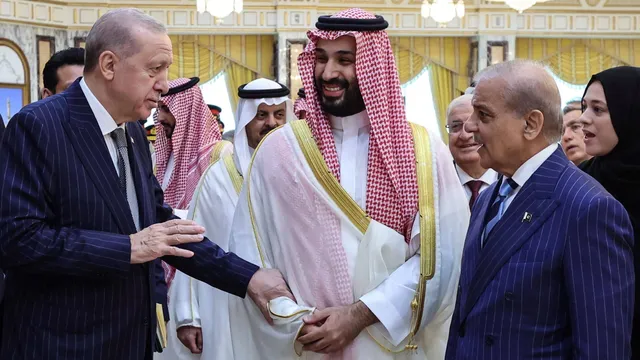
On August 7, 2026, Saudi Arabia, Pakistan, and Turkey signed a significant joint defense agreement in Mecca, aimed at enhancing their collective security amid escalating tensions in the Middle East. The agreement, known as the Mecca Joint Defense Agreement, was formalized during a meeting between Saudi Crown Prince Mohammed bin Salman, Turkish President Recep Tayyip Erdogan, and Pakistani Prime Minister Shehbaz Sharif. This pact reflects the three nations' commitment to mutual defense, stating that any armed attack against one of them will be considered an attack against all. The agreement comes at a time when regional security is increasingly threatened by the ongoing conflict between Iran and the United States, which has seen Iran and its allies launching attacks on Gulf states, including Saudi Arabia. The trilateral pact is seen as a response to the growing influence of Iran and the need for a coordinated defense strategy among these Sunni Muslim-majority countries. The leaders emphasized the importance of strengthening their defense ties to promote peace and stability in the region. The agreement is viewed as a significant step towards reshaping the security architecture of the Middle East, as it brings together three of the largest Muslim populations to deter aggression and enhance cooperation in various sectors, including defense and intelligence sharing. The pact is also expected to facilitate closer military collaboration and could potentially lead to a more regionally driven security framework, reducing reliance on external powers like the United States. The signing of this agreement marks a pivotal moment in the geopolitical landscape of the Middle East, as these nations seek to navigate the complexities of regional conflicts and assert their collective interests.