
Topic overview
In brief
- A Falcon 9 rocket's upper stage, launched in January 2025, is on a collision course with the moon.
- The impact is predicted to occur near the Einstein Crater at 2:35 A.M. EDT on Wednesday.
- Astronomers are eager to observe the aftermath of the collision, which may produce a visible plume of debris.
Summary
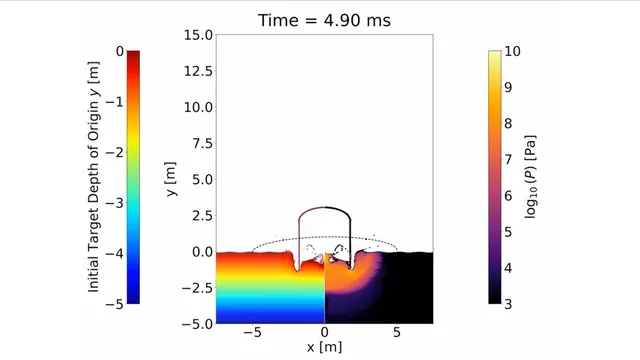
In January 2025, a Falcon 9 rocket launched to deliver two lunar landers, Firefly Aerospace's Blue Ghost and Japanese company ispace's Resilience, as part of the HAKUTO-R Program. The upper stage of the rocket was intended to return to Earth and burn up in the atmosphere after its mission. However, it went off course and entered an orbit around Earth that aligns it for a collision with the moon. This unexpected trajectory has led to significant interest from astronomers, particularly those at the University of Texas at Austin, who have created simulations to predict the impact's visual effects.
Amateur astronomer Bill Gray, who first tracked the rogue rocket, estimates that the collision will occur at approximately 2:35 A.M. EDT on Wednesday, near the Einstein Crater. The impact is expected to generate a plume of dust and debris, which may be visible from Earth, although the actual collision itself might not be detectable due to its location on the moon's sunlit side. Historically, no artificial or natural impact flashes have been observed on the illuminated surface of the moon, making this event particularly intriguing for scientists.