
Topic overview
In brief
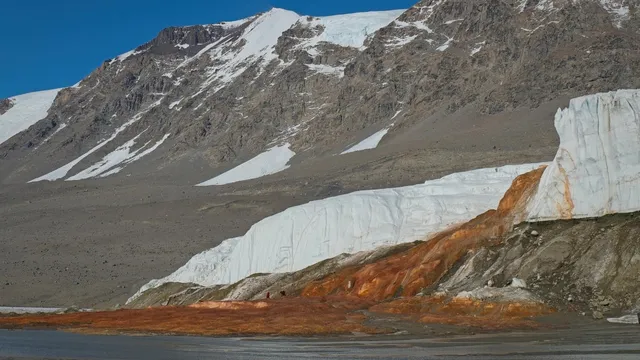
- Blood Falls is characterized by its striking red-orange color due to iron-rich saltwater.
- Recent research has identified various eukaryotic species in the waters of Blood Falls, suggesting a unique ecosystem.
- These findings indicate that life can persist in extreme conditions, offering insights into ancient ecosystems.
Summary
In Antarctica, the unique phenomenon known as Blood Falls has intrigued scientists for years due to its striking red-orange color. This coloration is attributed to iron-rich saltwater that flows from an underground lake, oxidizing upon exposure to air. Recent research published in Nature Geoscience by Andrew Allen and his team from the Scripps Institution of Oceanography has revealed the presence of various eukaryotic species in the waters of Blood Falls. These organisms are believed to be remnants from a time when seawater was isolated from the ocean, suggesting that they have survived in this extreme environment for millions of years.
The study indicates that the closest ocean is over 20 miles away, raising questions about how these marine microbes arrived at Blood Falls. The researchers propose that the organisms could have been transported by wind or left behind from ancient flooding events when the glacier moved into place. This discovery highlights the resilience of life in extreme conditions and offers insights into how ecosystems can persist through significant geological and climatic changes.