
Topic overview
Briefly
- Bartos, a businessman, was nominated as deputy U.N. ambassador for management and reform.
- He helped cut the U.N. budget by $1 billion in six months, calling financial reforms the easier part
- He publicly criticized U.N. official Francesca Albanese as a 'lunatic' for anti-American and anti-Is
What happened
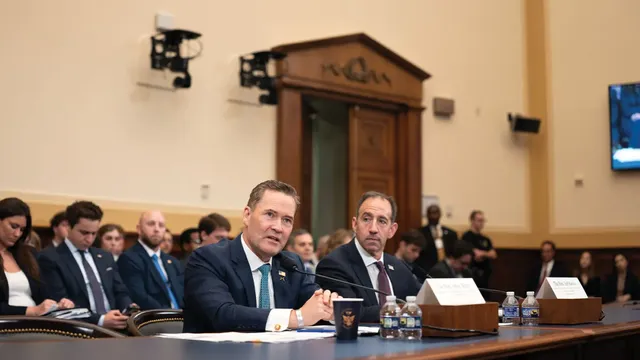
The Trump administration has appointed a team of unconventional leaders to reform the United Nations, with a focus on both financial efficiency and cultural change. Among them is Bartos, a Pennsylvania businessman nominated as deputy ambassador for management and reform. In his Senate hearing and subsequent conversations, Bartos emphasized that large institutions often fail due to incentive structures rather than ideology. He believes that by changing incentives, they can change expectations and ultimately the institution's culture. Bartos has been involved in budget cuts, noting that the U.S. reduced the U.N. budget by $1 billion in the last six months alone. However, he views these financial reforms as the easier part; the harder challenge is addressing what he calls 'institutional rot.' This includes confronting officials like Francesca Albanese, a U.N. special rapporteur, whom Bartos publicly slammed as a 'lunatic' for her anti-American, anti-West, anti-capitalist, anti-Jewish, and anti-Israel rhetoric. Bartos argued that in the private sector, such behavior would destroy a brand. His criticism was echoed by Ellie Cohanim, former deputy special envoy to combat antisemitism, who welcomed his stance. Bartos also highlighted the contrast between U.N. workers risking their lives in refugee camps in Central Africa and the tolerance of such rhetoric within the institution. The U.S. mission has posted clips of Bartos testifying about the need to repair the U.N.'s institutional rot. The administration's first test was making the U.N. run more efficiently, but the greater test lies ahead: persuading the institution to remember its founding principles. Bartos's approach involves relationship-building and cultural change, as seen in his efforts to bring a Freedom 250 performance to the U.N., which was praised by the performer. The team's goal is to reform the U.N. from within, focusing on both fiscal responsibility and a return to its core mission of peace and human rights.

Comprehensive report
Full story,
in detail.
Trace the developments that led here, see how the story evolved, and understand the forces and wider context surrounding it.