
Topic overview
Briefly
- The European Union is launching 66 new satellites to enhance its IRIS2 constellation.
- This initiative aims to increase secure governmental communication and emergency response capabilities.
- The project will significantly reduce the EU's reliance on US space technologies.
What happened
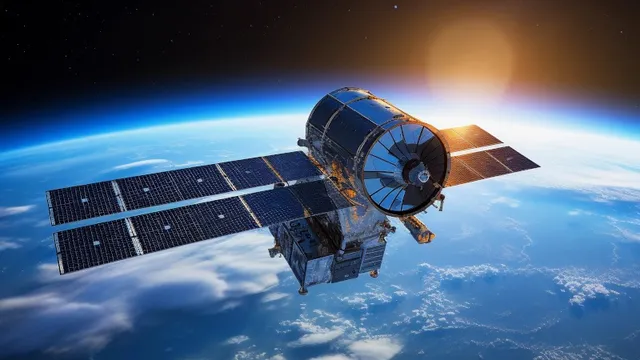
In a significant move to bolster its space capabilities, the European Union is set to launch 66 new satellites as part of the IRIS2 constellation. This initiative aims to enhance secure governmental communication and emergency response services across the bloc. The project, which is a collaboration with major companies such as Airbus, Deutsche Telekom, and Eutelsat, will increase the total number of satellites in the IRIS2 constellation to 348. The first launches are scheduled to begin by 2029, marking a crucial step in reducing the EU's reliance on US-dominated space technologies, particularly those provided by SpaceX's Starlink services.
The IRIS2 constellation is designed to support governments and emergency services in responding effectively during crises, thereby protecting essential infrastructure. The EU has set a budget of over €15.6 billion for this ambitious project, with additional funding expected from member states and other countries. Notably, Poland and Hungary have pledged more than €1 billion collectively, while Spain has committed between €1.6 billion and €2 billion. The SpaceRISE consortium is also contributing €4 billion, which includes significant investments from Hispasat and SES.
The new multi-orbit system will consist of 330 satellites in low Earth orbit and 18 in medium Earth orbit. This expansion not only aims to enhance governmental capacity by 60% but also opens up business opportunities for commercial users within the EU. The European Commission has been actively working to nurture the burgeoning space industry in the region, recently announcing a €300 million investment in the Finnish space intelligence start-up Iceye. This funding is part of the Scaleup Europe Fund, which supports high-potential deep-tech companies.
The IRIS2 project represents a strategic shift for the EU, as it seeks to establish a more autonomous and secure space infrastructure. By investing in its own satellite systems, the EU aims to ensure that its emergency services can operate independently and effectively, particularly in times of crisis. This initiative is expected to have far-reaching implications for the EU's space policy and its overall technological independence in the coming years.

Comprehensive report
Full story,
in detail.
Trace the developments that led here, see how the story evolved, and understand the forces and wider context surrounding it.