
Topic overview
Briefly
- A previous Melbourne season was shut down after one night due to a Covid-19 lockdown.
- Audience members now sit at individual tables with a phone and switchboard to select messages.
- The current set design uses plain black curtains, losing the tactile grubbiness of the original.
What happened
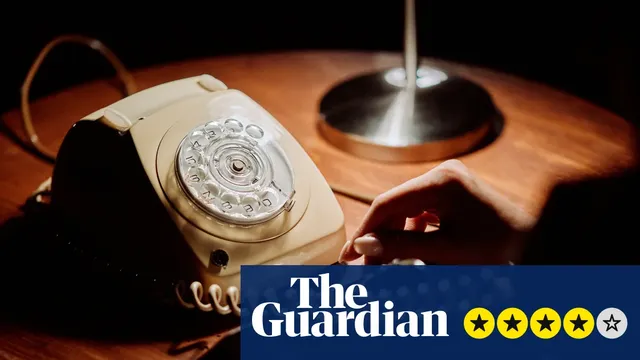
The Nightline, a collaborative creation by Roslyn Oades and Bob Scott, is an unusual hybrid of audiovisual art installation and verbatim theatre that offers a uniquely intimate, self-directed experience. The work, which runs for less than 40 minutes, places each audience member at an individual table illuminated by a single desk lamp. On the table sits an old plastic rotary phone and a small switchboard. This equipment allows participants to physically plug into and listen to a curated archive of voicemail messages. These messages were not scripted by actors but were recorded by members of the general public who called a dedicated line exclusively during the liminal hours between midnight and 6am. The piece's design, which isolates each person with a private auditory experience, paradoxically explores themes of communalism through a technology originally intended for one-on-one interaction. The anonymous nature of the callers, speaking alone in the dark of night, imbues the work with a profound sense of melancholy and a gentle spookiness. The act of listening is framed not as voyeuristic surveillance but as a form of silent, inconsequential witness-bearing.
The content of the messages is defined by its striking variety and idiosyncrasy, reflecting a broad cross-section of society united only by the compulsion to leave a message in the small hours. The voices range dramatically in tone and register, from stately and stentorian to tiny and squeaking, from clipped upper-middle-class accents to those full of local slang and elongated vowels. The emotional tenor of the callers is equally diverse; some seem hesitant or embarrassed by their confessions, while others sound exhilarated. The work is deeply haunted by the marginalizing nature of insomnia, which pushes people into the more recondite corners of society. The messages capture a spectrum of ratcheting despair and crazed inspiration that is unique to the dead of night. While the piece taps into the romanticism of the demimonde, it does not shy away from the sobering realities that motivate many of the calls, including the hardships of nightshift work, financial desperation, and general life struggles, with one reviewer noting they encountered two separate stories about amputation.
To counterbalance the deeply individualistic and isolating nature of the experience, where the sensation of being in an audience dissolves as one concentrates on the voice in their head, the creators have woven in communal interludes. During these moments, the desk lamps begin to flash or coordinate, and the sound design, composed by Bob Scott, shifts to overwhelm the individual voices with shared auditory experiences like rain or birdsong. A silent, matronly guide, performed by Katia Molino, moves through the space, offering wordless instruction. Her presence lends the production a 1960s bureaucratic office aesthetic, reminiscent of a purgatorial episode of Mad Men, and serves as a constant reminder of the group participation underlying the furtive, individual act of listening. This iteration of the production, however, features a different visual and spatial design by Clare Britton compared to its original Melbourne run. The current set is described as less liminal and convincingly detailed, with plain black curtains replacing the tactile grubbiness of the original venue. Furthermore, the guide's impact is diminished; in the original staging, she was positioned in an adjoining room behind glass, a choice that powerfully suggested a need for protection from a biological threat, a symbolic weight the character no longer carries as effectively.
The work's resonance is deeply tied to its context. Its previous Melbourne season was abruptly shut down after a single night due to one of the city's many Covid-19 lockdowns. The isolation and sense of powerlessness that defined that era have not dissipated but have instead morphed into more complex variations of the same feelings. This makes the piece's hushed power, which gains much from the sense of a community huddling together but not too close, feel as necessary as ever. The technical artistry remains a highlight, with Fausto Brusamolino's ingenious and winking lighting design and Bob Scott's wonderfully effective sound composition, which washes over the audience and weaves its way into the private conversations. The experience is a theatre for one that is simultaneously a collective ritual, finding profound connection in the simple act of listening to a stranger's voice in the dark.

Comprehensive report
Full story,
in detail.
Trace the developments that led here, see how the story evolved, and understand the forces and wider context surrounding it.