
Topic overview
Briefly
- Arthur Rimbaud abandoned poetry entirely and became an export merchant in Cyprus and Africa
- The production runs nearly three hours as an extended monologue with invisible characters
- The performance does not explain what motivated Rimbaud's radical career transformation
What happened
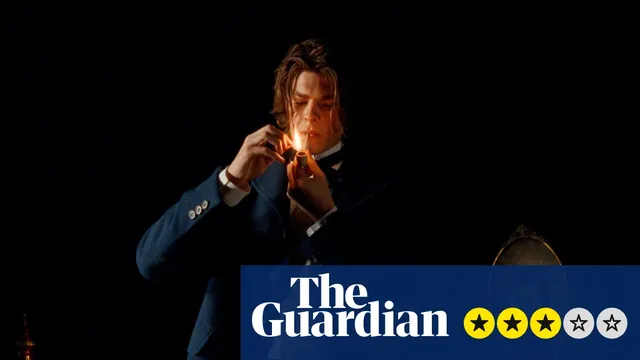
Patrick Wang, a US experimentalist filmmaker, has created an unusual theatrical-style one-man show that chronicles the life of French poet Arthur Rimbaud. The production, which runs nearly three hours, takes place entirely within a black box stage space, occasionally punctuated by back-projection videos of outdoor scenery. Australian actor Blake Draper portrays Rimbaud with an English accent that carries occasional scouse inflections, delivering an extended bravura monologue to invisible characters including Rimbaud's mother, sister, and his lover Paul Verlaine, whose voices are represented by musical instruments rather than human speech.
The first act focuses on Rimbaud's early years as a young aesthete, with Draper sporting floppy long hair markedly different from the famous spiky short cut seen in the poet's well-known portrait photograph. During this section, Rimbaud declaims his poetic yearnings while lounging, preening, and pouting. The narrative follows his escape from the stultifying provincial town of Charleville to Paris, where he arrives nearly penniless and experiences nights in jail. It is in the French capital that he meets Verlaine and begins what is described as an ecstatically transgressive relationship with the older poet. This period represents Rimbaud's most famous creative phase, when he produced the revolutionary poetry that would cement his literary legacy.
The second act presents a radical transformation that remains the production's central mystery. Rimbaud cuts his hair, grows a moustache, and completely abandons both poetry and romantic entanglements. He embarks instead on an entirely new career as an export merchant, working in Cyprus and various locations across Africa. This commercial pursuit is undertaken with a vigorous mature competence and severity that his previous bohemian life had given no indication he possessed. The performance struggles to illuminate precisely what motivated this dramatic shift from artistic creation to commercialism, leaving audiences to ponder the psychological and circumstantial factors that might drive a celebrated poet to reject his art so completely.
The production, while diverting and committed, leaves certain aspects of Rimbaud's life opaque. His relationship with his reading public during his literary period is not clearly represented, despite his status as a published poet. The work presents a distinctive and demanding experience that ultimately preserves the mysteries of Rimbaud's life rather than solving them, offering no clear explanation for why a figure of such artistic intensity would transform so thoroughly into a pragmatic businessman in foreign lands.

Comprehensive report
Full story,
in detail.
Trace the developments that led here, see how the story evolved, and understand the forces and wider context surrounding it.