
Topic overview
Briefly
- Astronomers have identified a new cosmic object called a black hole star, which emits energy similar to black holes.
- The object, MoM-BH*-1, is located billions of light years away and formed 660 million years after the Big Bang.
- This discovery suggests that black hole stars may be crucial in the evolution of galaxies and the formation of supermassive black holes.
What happened
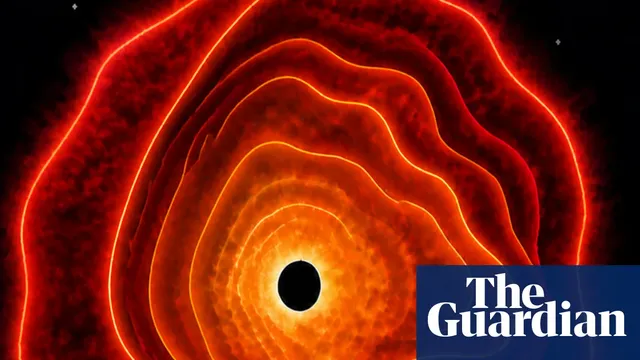
In a groundbreaking discovery, astronomers have identified a new type of cosmic object known as a black hole star, which is located billions of light years from Earth in the constellation of Cetus. This object, named MoM-BH*-1, is believed to have formed approximately 660 million years after the Big Bang. It is the size of the entire solar system and emits a brilliant red light, which is significantly more energy than any known star can produce. The findings were made possible through observations from NASA's James Webb Space Telescope, which first detected these mysterious red dots in deep-space images in 2022.
The research team, led by Dr. Rohan Naidu from the Kavli Institute for Astrophysics and Space Research at the Massachusetts Institute of Technology, focused on the red spot in the telescope's images. They found that while the object resembles a massive star, its energy output is closer to that of black holes. This suggests that black hole stars may play a crucial role in the evolution of galaxies and could be the seeds of present-day supermassive black holes, such as the one at the center of the Milky Way.
The discovery of black hole stars aligns with the emergence of supermassive black holes, which are found at the centers of most galaxies. These black hole stars are theorized to be embedded in growing galaxies, radiating light that can obscure surrounding stars. As they consume their gas cocoons, they may become less visible, leading to their absence in the modern universe. The implications of this discovery could reshape our understanding of galaxy formation and the early universe.
The research has sparked significant interest in the astrophysics community, as astronomers continue to investigate the nature of these black hole stars and their origins. The findings provide important clues about the early universe and the formation of massive black holes, which have puzzled scientists for decades. Further studies using the James Webb Space Telescope and other observatories are expected to shed more light on this fascinating topic, potentially revealing the mechanisms behind the formation of black hole stars and their impact on galaxy evolution.

Comprehensive report
Full story,
in detail.
Trace the developments that led here, see how the story evolved, and understand the forces and wider context surrounding it.