
Topic overview
Briefly
- A magnitude 7.7 earthquake struck off Flores Island, Indonesia, on Saturday, killing at least 47 and
- The quake triggered landslides and small tsunamis, damaging over 900 homes and forcing thousands to
- Rescue efforts were hampered by power outages and blocked roads, with the death toll expected to
What happened
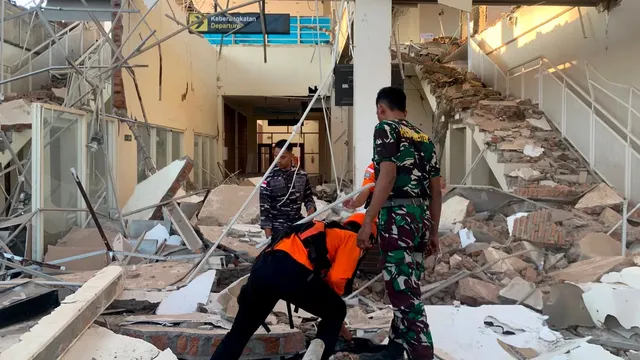
On Saturday, August 15, 2026, a powerful magnitude 7.7 earthquake struck off the coast of Flores Island in Indonesia's East Nusa Tenggara province, causing widespread destruction and loss of life. The quake, which occurred at a depth of about 10 kilometers (6 miles) and 68 kilometers (42 miles) north-northwest of Ende, was followed by dozens of aftershocks, including a magnitude 6.2 tremor. The Indonesian meteorological agency reported at least 235 aftershocks, with the largest recorded at magnitude 6.2. The earthquake triggered landslides and small tsunamis, with waves of up to 1.61 meters (5.3 feet) observed in the coastal village of Riung in Ngada regency, and 0.94 meters (3.1 feet) in Maurole, Ende Regency. The disaster agency reported that at least 47 bodies had been recovered, with most found in East Manggarai, Manggarai, and Sikka regencies. At least 50 people were hospitalized, and about 2,000 people were forced to evacuate their homes and relocate to temporary shelters. The quake destroyed more than 900 homes and damaged nearly 450 more, forcing about 5,000 people into temporary shelters. More than 100 public facilities, including schools, medical centers, and churches, were also destroyed or damaged. Search and rescue operations were hindered by power outages, communication disruptions, and damaged infrastructure, including landslides that blocked the Trans-Flores highway and isolated remote villages. The death toll was expected to rise as rescue teams reached previously inaccessible areas. The earthquake was felt strongly across the region, with about two million people experiencing strong or violent shaking. The U.S. Geological Survey noted that earthquakes are common in the region, with 37 other earthquakes of magnitude 6 or greater occurring there since 1950, including a 1992 earthquake and tsunami that killed about 2,500 people on Flores. The Indonesian authorities initially issued a tsunami warning but later lifted it after monitoring showed no significant sea-level changes. However, small tsunamis were documented in Manggarai and East Manggarai. The earthquake also affected Labuan Bajo, the gateway to Komodo National Park, a popular tourist destination. International leaders expressed condolences and offered assistance, including the European Commission, which offered satellite observation support through the Copernicus program. The World Health Organization said it was coordinating with health authorities. The earthquake occurred in the Pacific Ring of Fire, an area prone to seismic activity, and was one of the largest to hit the region in decades.

Comprehensive report
Full story,
in detail.
Trace the developments that led here, see how the story evolved, and understand the forces and wider context surrounding it.