
Topic overview
Briefly
- 90 prisons were built or expanded in Britain between 1842 and 1877
- More than 30 Victorian prisons remain in use, holding 25% of UK inmates
- A 1922 report argued these buildings should be destroyed with dynamite
What happened
The United Kingdom's prison infrastructure retains a significant Victorian legacy, with more than 30 prisons built during the 19th century still operational today. These facilities collectively house approximately one-quarter of the nation's total prison population, demonstrating the remarkable persistence of architectural designs from an era when 90 prisons were constructed or substantially expanded between 1842 and 1877. HMP Lincoln, which opened at the conclusion of this intensive building period, exemplifies the Victorian belief in progress manifested through bricks and mortar, intended to reform individuals who had positioned themselves against law and society. The introductory essay to the book Incarcerated notes this historical context, framing these structures as physical embodiments of a particular penal philosophy that has proven remarkably durable despite changing attitudes toward incarceration and rehabilitation.
Criticism of these Victorian facilities emerged relatively quickly after their construction. In 1922, Stephen Hobhouse and Fenner Brockway published their comprehensive study English Prisons Today: Being the Report of the Prison System Enquiry Committee, in which they delivered a damning assessment of the aging infrastructure. Their conclusion was stark and unambiguous: the only useful reform to which these Victorian buildings could be subjected was dynamite. This powerful condemnation, made less than five decades after the construction boom ended, highlighted fundamental concerns about the suitability of 19th-century architectural designs for 20th-century penal practices. Despite this early and forceful critique, the buildings have persisted, suggesting either institutional inertia, financial constraints preventing replacement, or perhaps a combination of both factors that has kept these facilities in continuous operation for well over a century.
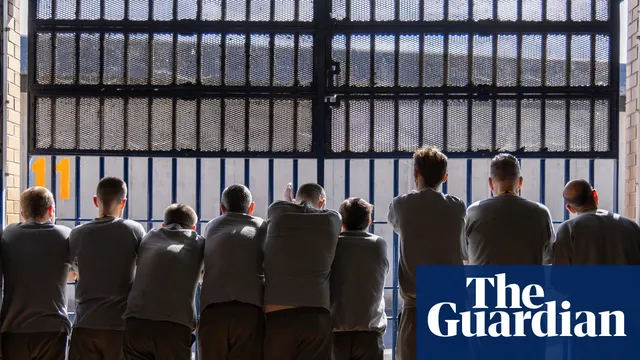
Photographer Andy Aitchison has documented life inside Britain's prisons for more than two decades, beginning his work in 2004 when the Big Issue magazine commissioned him to photograph inside HMP Wandsworth, another Victorian-era institution. During that initial assignment, Aitchison experienced the complex social environment of prison life, noting the contrast between the chaotic atmosphere of the wings and the relative sanctuary of the radio room, where inmates engaged in work activities appeared transformed, becoming almost different people in a professional environment. This experience proved formative, leading Aitchison to request permission for return visits. Over a six-month period, he made 10 to 15 additional trips to the facility, during which he began recognizing parallels between his own life circumstances and those of the prisoners he photographed, including shared experiences of parenthood and similar ages, separated only by the fact of incarceration. Since that initial project, Aitchison has photographed nearly 50 prisons across the United Kingdom, frequently making repeat visits as part of long-term documentary projects. His work has been utilized extensively by charitable organizations and published in both national and international outlets, and he maintains a regular contribution to Inside Time, the UK's primary prison newspaper.
The conditions under which Aitchison operates are strictly controlled by institutional requirements. His photographic equipment undergoes thorough searches upon both entry and exit from facilities, consent forms must be obtained and signed by any prisoner who appears in his images, and certain security-sensitive elements such as keys, locks, and fence numbers must never be captured in photographs. Additionally, the faces of serving prisoners cannot be shown without explicit permission from the Ministry of Justice, a restriction that shapes the visual character of his work. The images collected in Incarcerated form part of an ongoing interdisciplinary research project examining the extended afterlives of Britain's Victorian prison estate, involving collaboration between geographers, criminologists, and historians. This research investigates how the physical fabric and functional purpose of 19th-century prisons have evolved over time, the inherent tensions between architectural obsolescence and institutional persistence, and the lived experiences of both prisoners and staff within these historic structures across different historical periods. Aitchison's photographs, presented alongside essays written by members of the research team, create a distinctive portrait of Britain's still-functioning Victorian prisons and the people who inhabit them.

Comprehensive report
Full story,
in detail.
Trace the developments that led here, see how the story evolved, and understand the forces and wider context surrounding it.