
Topic overview
Briefly
- Trump announced at a New York rally that he will declare the Strait of Hormuz a U.S. territory after
- The strait, through which 20% of global oil passes, has been blocked since the war began in February
- Iran rejected the claim, insisting the strait remains under its command and will not reopen until
What happened
On Friday, August 14, 2026, President Donald Trump announced at a rally in Garden City, New York, that he intends to declare the Strait of Hormuz a U.S. territory once the ongoing war with Iran concludes. The war, which began in February 2026, has lasted nearly six months, and Trump stated, "After we finish defeating Iran, which is being very badly defeated, pretty soon I'll be declaring the Hormuz Strait a territory of the United States." This statement escalates his previous rhetoric, as he had earlier claimed the U.S. has "total control" over the strait and had suggested renaming it "the Strait of America."
The Strait of Hormuz is a strategically vital waterway through which approximately 20% of the world's oil and liquefied natural gas passes. Since the war began, the strait has been largely closed to traffic, causing significant disruptions to global energy markets. The U.S. has imposed a naval blockade, which Trump described as a "WALL OF STEEL," preventing ships from entering or leaving Iranian ports. This blockade has contributed to rising oil prices, with Brent crude approaching $90 per barrel and U.S. gasoline prices around $4 per gallon. Trump defended these higher prices as a necessary cost to prevent Iran from obtaining a nuclear weapon, stating, "For you to pay a tiny little bit more for your gasoline, just remember you're doing it so that a very evil country cannot have a nuclear weapon."
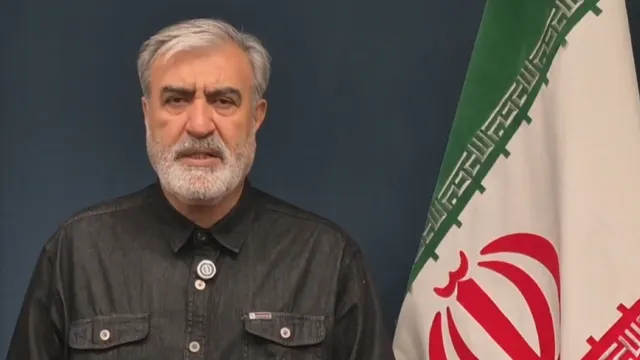
Iran has rejected Trump's claims of control over the strait. Iran's deputy foreign minister, Kazem Gharibabadi, responded on X, saying the strait "cannot be seized by tweet, nor by aircraft carrier, nor by issuing an order, nor by an election speech," and insisted that the strait "will only be closed and opened under Iran's command." The Iranian Persian Gulf Strait Authority also stated that the strait "remains blocked and will not be reopened until Iran's conditions are accepted." A preliminary peace deal signed on June 17, 2026, fell apart a month later over disagreements regarding control of the strait, leaving the two countries at an impasse.
Trump's announcement is part of a broader pattern of territorial ambitions, as he has also discussed acquiring or annexing Greenland, Canada, and Venezuela. The declaration, if pursued, would have significant legal and geopolitical implications, as the strait is currently under the joint jurisdiction of Iran and Oman under international law. The international community has not yet formally responded to Trump's latest statement, but it is likely to face widespread opposition. The economic impact of the war and the blockade has become a political issue for Trump, with Democrats already using the higher fuel prices to criticize his policies ahead of the November midterm elections. Trump, however, remains defiant, saying he will "never apologize" for the war and that the U.S. is "doing a great service for the world."

Comprehensive report
Full story,
in detail.
Trace the developments that led here, see how the story evolved, and understand the forces and wider context surrounding it.