
Topic overview
Briefly
- Geoffrey Hinton predicted massive unemployment from AI in a November 2025 discussion with Bernie.
- Hinton said tech companies are betting on AI replacing workers to recoup investments.
- Sanders warned nearly 100 million U.S. jobs could be displaced by automation.
What happened
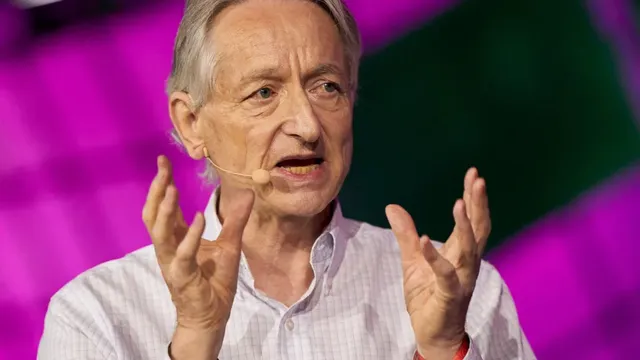
In November 2025, Geoffrey Hinton, often called the "Godfather of AI," participated in a discussion with Senator Bernie Sanders at Georgetown University. During this conversation, Hinton expressed his belief that artificial intelligence will likely lead to massive unemployment. He pointed out that tech companies are investing heavily in data centers and chips, and they expect to recoup these investments by selling AI systems that can perform work more cheaply than human workers. Hinton stated that these companies are essentially betting on AI replacing a large number of workers.
Hinton has become increasingly critical of Big Tech's priorities, arguing that the industry is driven more by short-term profits than by scientific progress. His warnings come at a time when the economics of AI are under scrutiny. For instance, OpenAI, the maker of ChatGPT, is not expected to turn a profit until at least 2030 and may need over $207 billion to support its growth, according to HSBC estimates from November 2025.
Hinton acknowledged that AI will also create new jobs, as many tech leaders predict, but he cautioned that all predictions about AI's future should be treated with skepticism. He compared predicting the future of AI to driving in fog, where one can see clearly for a year or two but has no idea what will happen ten years out.
Senator Sanders has also been vocal about the potential impact of AI on jobs. In a report released in October 2025, he warned that nearly 100 million U.S. jobs could be displaced by automation. Workers in fast food, customer service, and manual labor face the highest risks, but white-collar roles in accounting, software development, and nursing could also see significant cuts. Sanders emphasized that work is an integral part of being human and that without proper guardrails, society may regret its response to AI.
Experts suggest that workers who adapt and use AI to amplify their skills will have the best chance of navigating the coming changes. The future of work remains uncertain, but the warnings from Hinton and Sanders highlight the urgent need for discussion and policy considerations.

Comprehensive report
Full story,
in detail.
Trace the developments that led here, see how the story evolved, and understand the forces and wider context surrounding it.