
Topic overview
In brief
- LINK satellite began spinning uncontrollably in space on July 28, 2026, leading to communication loss.
- Katalyst has successfully reduced LINK's spin rate and is working on restoring its functionality.
- NASA is committed to saving the Swift observatory, which is at risk of reentering Earth's atmosphere this fall.
Summary
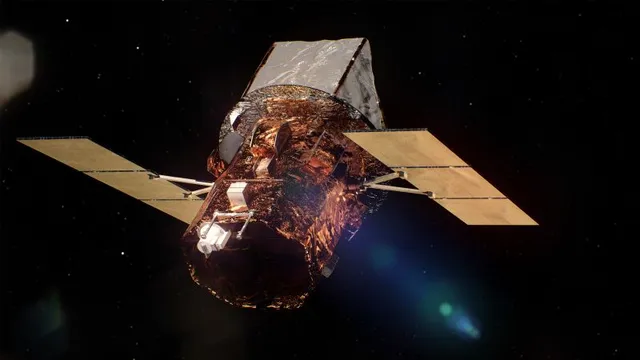
In the United States, a satellite named LINK, which was launched to assist in a rescue mission for the Swift observatory, has encountered significant operational challenges. After its successful launch on July 15, 2026, LINK initially communicated well and deployed its solar arrays. However, by July 28, it began to spin uncontrollably in space, leading to a temporary loss of communication. Preliminary investigations revealed that two of LINK's three reaction wheels were inoperable, and there was a loss of functionality in its cold gas thruster system. This situation raised concerns about the satellite's ability to complete its mission to boost the Swift observatory back to its optimal orbit.
Despite these setbacks, Katalyst's mission operations team has been proactive in addressing the issues. They managed to reduce LINK's spin rate from 9 degrees per second to 4 degrees per second through a series of thruster burns. This progress has been crucial in conserving fuel for the upcoming rendezvous and boost phase of the mission. Katalyst has also confirmed that they are working on a flight software update to restore LINK's orientation in space, which is essential for aligning its orbit with that of the Swift observatory.