
Topic overview
In brief
- Researchers at the University of Delaware are experimenting with electronic tags on sharks to gather ocean data.
- The project aims to understand the Mid-Atlantic's cold pool and its effect on hurricane intensity.
- The research hopes to improve hurricane preparedness and change perceptions of sharks.
Summary
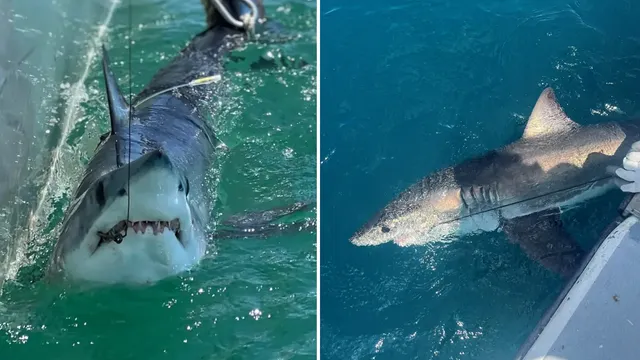
In the summer of 2026, researchers from the University of Delaware embarked on an innovative project to utilize sharks as a means to predict hurricane intensity along the East Coast of the United States. This initiative involves attaching electronic tags to various shark species, which collect crucial data such as ocean temperature and salinity. These measurements are vital for understanding the Mid-Atlantic's 'cold pool,' a layer of cold water that influences hurricane development. The research team, led by marine scientist Aaron Carlisle, has been conducting their experiments aboard the R/V Daiber, a research vessel owned by the university's College of Earth, Ocean and Environment.
The tagging process began in May, coinciding with the seasonal migration of sharks closer to the coast after their winter habitats. The researchers have identified shortfin mako sharks, blue sharks, smooth hammerheads, and juvenile great white sharks as the most suitable candidates for tagging. These species frequently surface, allowing their tags to transmit data to satellites. The tags are designed to be harmless, as they are attached to the dorsal fin and made from materials that will eventually corrode and detach from the sharks.