
Topic overview
Briefly
- Kim Jong Un replied to Putin's congratulatory message, reaffirming deepening ties between North and
- Russia on the 81st anniversary of Japan's surrender, with Putin vowing cooperation in all sectors.
- Russian ship Pallada arrived at Wonsan port for a goodwill visit, while South Korean President Lee J
What happened
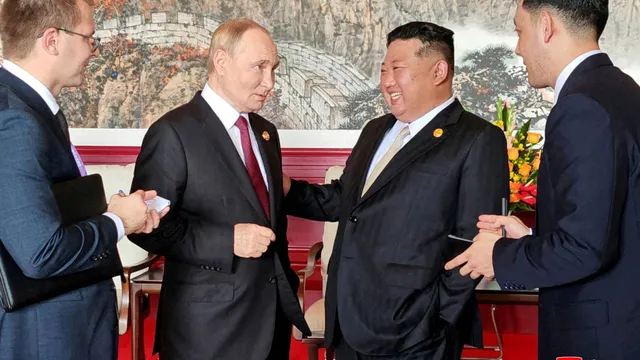
On Saturday, August 15, 2026, North Korea marked the 81st anniversary of Japan's surrender in World War II, which ended its colonial rule over Korea. In a message to Russian President Vladimir Putin, North Korean leader Kim Jong Un reaffirmed the deepening of ties between the two countries. This exchange came in response to a congratulatory message from Putin, who noted that the bond between the nations was forged when Soviet soldiers fought against Japan. Putin also stated that cooperation between Russia and North Korea would continue "in all the sectors." Kim expressed hope for the future of their relationship, which he said had "carried forward the history of common struggle for justice and precious traditions of friendship."
The strengthening of Pyongyang-Moscow relations has been particularly notable since North Korea began deploying troops and weapons to support Russia's war against Ukraine. This marks Pyongyang's most significant involvement in a war since the 1950s, indicating a major shift in its foreign policy and military alignment. The two countries have deepened their partnership despite international sanctions and condemnation, with Russia providing economic and diplomatic support to North Korea while receiving military assistance in return.
As part of the liberation anniversary celebrations, the Russian ship Pallada arrived at Wonsan port on Saturday for a goodwill visit. The ship was greeted by North Korean provincial officials and Russian embassy staff, according to the state-run Korean Central News Agency (KCNA). This visit symbolizes the growing military and diplomatic cooperation between the two nations, which have been increasingly isolated from the international community due to their actions.
On the same day, South Korean President Lee Jae Myung called for talks with the rival North aimed at peaceful coexistence. Speaking at Seoul's Liberation Day ceremony, Lee emphasized that the two Koreas need safeguards to prevent conflict and should work to replace their armistice with a "peace regime." He urged dialogue to formally end the 1950-1953 Korean War, which ended in a ceasefire but no peace treaty. Lee also suggested that such talks could explore ways to curb Pyongyang's nuclear program. However, Pyongyang has rejected Lee's overtures and criticized U.S.-South Korean military exercises as provocations.
Additionally, on Thursday, Putin drew Tokyo's condemnation with a visit to an island off Hokkaido, which Japan claims and Moscow seized in the days after Japan's 1945 surrender. This visit further strained relations between Russia and Japan, adding to the regional tensions. The island dispute remains a contentious issue between the two countries, and Putin's visit was seen as a deliberate provocation by Japan.
The events of this weekend highlight the complex geopolitical dynamics in East Asia, with North Korea and Russia strengthening their alliance while South Korea seeks dialogue and Japan faces challenges from Russia. The deepening ties between Pyongyang and Moscow have significant implications for regional security and the balance of power, as both countries continue to defy international norms and face sanctions. The situation remains fluid, with potential for further escalation or diplomatic efforts to address the ongoing conflicts and disputes.

Comprehensive report
Full story,
in detail.
Trace the developments that led here, see how the story evolved, and understand the forces and wider context surrounding it.