
Topic overview
Briefly
- Lafayette toured all 24 states in 1824-1825, starting in Staten Island.
- He met every living president and several future ones during his travels.
- He publicly embraced Black men, including a former slave who spied for him.
What happened
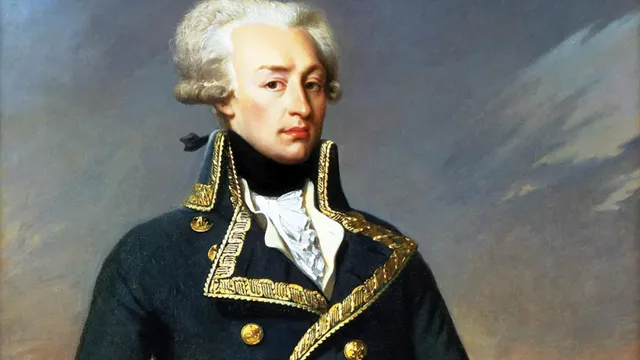
In 1824, the Marquis de Lafayette, the last surviving major general of the American Revolutionary War, returned to the United States for a yearlong tour that took him to all 24 states then in the Union. This journey, which began with his arrival in Staten Island in August, was not merely a nostalgic visit but a profound national event that allowed Americans to connect with the living memory of their revolution. Lafayette, who had been a key figure in securing French support for the American cause, was now 67 years old and the embodiment of the revolutionary ideals that had shaped the young nation.
The tour was meticulously planned and executed, with Lafayette traveling by steamboat, horseback, and canal boat. He visited major cities such as New York, Boston, Philadelphia, New Orleans, and Charleston, as well as small villages and hamlets. The Erie Canal, nearing completion, allowed him to save time on his return east. Despite the challenges of poor roads and unreliable steamboats, Lafayette pressed on, meeting every living president and several future ones, including John Adams, Thomas Jefferson, James Madison, James Monroe, John Quincy Adams, Andrew Jackson, and William Henry Harrison. He also encountered notable figures like Simon Bolivar's nephew, Fernando Bolivar, and Joseph Bonaparte, the former king of Spain, who had become a gentleman farmer in New Jersey.
Lafayette's presence was a massive social occasion wherever he went. Crowds gathered to see him, and he was showered with admiration. He was particularly notable for his willingness to publicly embrace Black men, including James Armistead Lafayette, a former slave who had served as a spy for him during the war, and Pompey, his first servant upon his arrival in 1777. This act was significant in a nation still grappling with the institution of slavery. Lafayette coped with the adulation by using what historian Richard Brookhiser calls "the turn," a rhetorical maneuver in which he downplayed his own contributions and emphasized the efforts of others and the nation itself. This humility endeared him even more to the American public.
The tour had a double purpose, as noted in the review: it allowed Lafayette to see the nation he had helped create and allowed Americans to celebrate their revolution as a living event. Brookhiser writes that this was "the last opportunity" to see and celebrate the Revolution as a living event, as the generation of founders was passing away. The tour thus served as a bridge between the revolutionary past and the expanding nation of the 1820s, reinforcing the ideals of liberty and democracy that would continue to shape American identity. Lafayette's journey was not just a personal triumph but a national reaffirmation of the principles that had founded the United States.

Comprehensive report
Full story,
in detail.
Trace the developments that led here, see how the story evolved, and understand the forces and wider context surrounding it.