
Topic overview
Briefly
- Residents of Newfoundland and Labrador can expect to see a partial solar eclipse today.
- The Johnson Geo Centre is hosting a watch party with activities for children and live streaming of the total eclipse.
- Despite potential weather challenges, the event aims to engage the community in astronomical observation.
What happened
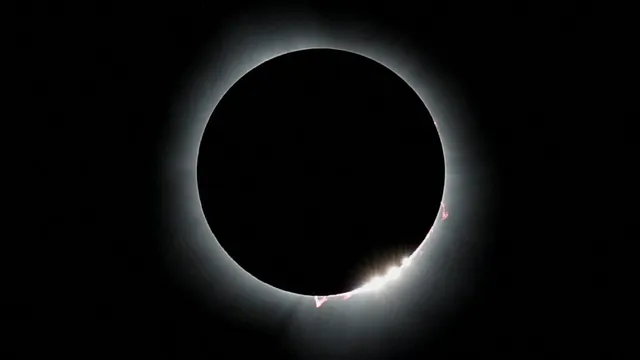
On August 12, 2026, residents of Newfoundland and Labrador, Canada, are set to witness a partial solar eclipse, weather permitting. The Johnson Geo Centre in St. John's is organizing a watch party from 12 p.m. NT to 5 p.m., in collaboration with the Royal Astronomical Society of Canada and STEM Girls. The event will include activities for children to create solar viewing tools, ensuring safe observation of the eclipse. The forecast indicates that approximately 53% of the sun will be obscured by the moon in St. John's, with Gander experiencing similar coverage. However, meteorologist Ashley Brauweiler cautioned that the weather conditions may not be ideal for viewing, with a chance of overcast skies. Despite this, the Geo Centre plans to host indoor events regardless of the weather, including a live stream of the total solar eclipse occurring in Greenland, Iceland, and Spain. This partial eclipse is part of a larger astronomical event, as totality will be visible in parts of Europe, marking the first total solar eclipse for the continent since 1999. The excitement surrounding the eclipse is palpable, as many people recall the total solar eclipse that crossed North America in 2017, which sparked a renewed interest in solar phenomena. The upcoming event serves as a reminder of the beauty and rarity of such celestial occurrences, encouraging both enthusiasts and casual observers to look skyward and appreciate the wonders of the universe.

Comprehensive report
Full story,
in detail.
Trace the developments that led here, see how the story evolved, and understand the forces and wider context surrounding it.