
Topic overview
Briefly
- Moczarski had previously taken part in plans to assassinate Stroop during the war.
- The book was originally published in a censored edition approved by Poland's Communist party.
- Moczarski's daughter spent nearly 40 years securing a complete English translation.
What happened
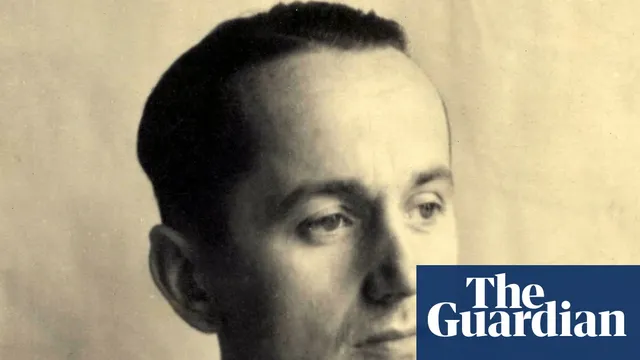
Kazimierz Moczarski, a Polish war hero and member of the Home Army resistance group, found himself imprisoned by the postwar Communist regime in 1949. He was placed in a cell with Jürgen Stroop, the SS general responsible for destroying the Warsaw ghetto and murdering or capturing more than 56,000 Jews. A third prisoner, Gustav Schielke, a low-ranking SS officer not fully committed to Nazi ideology, joined them. Moczarski, who spoke German, recognized an extraordinary opportunity. He decided to use the 255 days of shared imprisonment to investigate what transformed ordinary Germans into mass murderers obsessed with imposing their "Ordnung" across the world. The three men developed a complex relationship that resembled a drama. They argued and sparred intellectually, yet they also formed a strange solidarity as prisoners, worrying when one was taken for interrogation. Stroop lived under the shadow of a death sentence, a circumstance Moczarski believed encouraged him to talk freely. Moczarski and Schielke cross-questioned Stroop extensively about his wartime activities. Moczarski could not take any notes in prison. He composed the entire book in his head, later claiming he could replay conversations as if they were tape recordings. He said long-term prisoners develop a different ability to hear and learn to remember. After his release, Moczarski worked as a journalist and assiduously fact-checked Stroop's version of events against available records. The book was serialized in a Polish literary magazine in the early 1970s and published in 1977 after Moczarski's death, with Communist party permission, in a censored edition. It became an instant bestseller and was adapted into a play directed by Andrzej Wajda the same year. Moczarski's daughter Elżbieta spent nearly 40 years trying to get a complete, uncensored translation published in English. Nearly 50 years after the original publication, an uncensored English version is finally appearing. Publisher Clare Bullock heard about the book by chance nearly a decade ago while studying Polish. Her teacher recommended it as a unique work. Bullock notes that the book allows Stroop to condemn himself in his own words, with his repeated lascivious references to women's breasts becoming almost a running gag. She connects the work to Hannah Arendt's concept of the banality of evil, seeing it embodied in one man. The book's path to publication was complicated by Poland's political situation. While everyone wanted to hear about Nazis, few wanted information on why a high-ranking resistance hero was imprisoned alongside them for so long by the Communist authorities. Moczarski's own mother had been in the resistance and was also arrested after the war. The complete English translation represents a significant historical document, offering an unmediated look into the psychology of a perpetrator through the meticulous work of a fellow prisoner who served as interrogator, journalist, and historian under the most constrained circumstances imaginable.

Comprehensive report
Full story,
in detail.
Trace the developments that led here, see how the story evolved, and understand the forces and wider context surrounding it.