
Topic overview
Briefly
- He tore his ulnar collateral ligament in 1974, an injury that typically ended pitching careers.
- Dr. Frank Jobe performed an experimental surgery, replacing the ligament with a forearm tendon.
- The procedure, now called Tommy John surgery, has since saved the careers of countless pitchers.
What happened
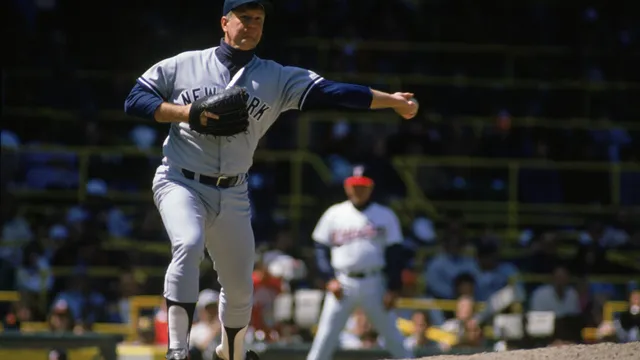
Thomas Edward "Tommy" John Jr., a left-handed pitcher whose 26-year Major League Baseball career was defined by a groundbreaking medical procedure, died at his home in Bradenton, Florida, on Saturday, August 15, 2026. He was 83 years old and had been in hospice care, surrounded by his wife, Cheryl, and other family members. His death was confirmed by his agent, Mike Maguire, and prompted an outpouring of tributes from the baseball world, particularly from the Los Angeles Dodgers and New York Yankees, two of the sport's most storied franchises for which he played.
John's legacy is inextricably linked to a single, career-altering moment in 1974. While pitching for the Dodgers, he threw a pitch and felt a sensation he later described as if his arm had detached from his body. He had torn the ulnar collateral ligament (UCL) in his left elbow, an injury that at the time was a death sentence for a pitcher's career. Facing the end of his time in baseball, John agreed to an experimental procedure proposed by Dodgers team physician Dr. Frank Jobe. On September 25, 1974, Dr. Jobe performed the first-ever UCL reconstruction on a pitcher, replacing the damaged ligament with a tendon taken from John's right forearm. Dr. Jobe gave the surgery a mere 100-to-1 chance of success. The rehabilitation was grueling and unprecedented; John missed the entire 1975 season, working with team trainer Bill Buhler on a regimen that included soaking his arm and even squeezing Silly Putty to rebuild strength.
The consequences of this medical gamble were monumental. John made a triumphant return in 1976, earning the nickname "The Bionic Man," and went on to pitch for another 14 seasons, winning 164 of his 288 career games after the surgery. The procedure, which became universally known as "Tommy John surgery," transformed the sport. It has since saved the careers of countless pitchers at all levels of baseball, from youth leagues to the major leagues, and is now a standard, almost routine, operation. John's personal success continued as well; he was a four-time All-Star, earning selections in 1968, 1978, 1979, and 1980, and he led the league in shutouts three times. He played in three World Series with the Dodgers and later helped the Yankees return to the Fall Classic in 1981, where he pitched 13 innings and allowed only one run over three appearances against his former team.
Despite his remarkable longevity and 288 career wins, John never won a Cy Young Award and was not elected to the Baseball Hall of Fame. In his final days, aware of his declining health, he penned a farewell letter that was shared by the Yankees during their Old-Timers' Day celebration earlier in August 2026. In the message, he expressed deep gratitude to Dr. Jobe for saving his arm and enabling him to continue his career, and he thanked the fans for their support over his 26 years in the game. He also reflected on his humble beginnings, recalling his father's words that he would always be "Tommy John from Terre Haute, Indiana." John is survived by his wife, Cheryl, and three children, Tommy, Travis, and Tamara. His family had previously endured a near-tragedy during his time with the Yankees when his young son, Travis, survived a critical fall from a third-story window.

Comprehensive report
Full story,
in detail.
Trace the developments that led here, see how the story evolved, and understand the forces and wider context surrounding it.