
Topic overview
Briefly
- Rural residents in Canada are learning to fight wildfires as they become more frequent due to climate change.
- Hubert Wigwas defied evacuation orders to protect his First Nation community in northern Ontario.
- Local training initiatives aim to empower communities to respond effectively to wildfires.
What happened
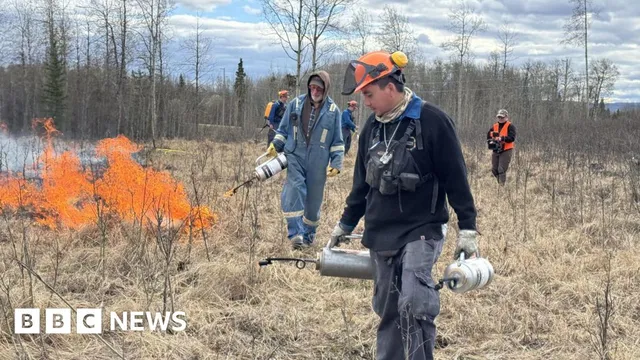
In Canada, particularly in rural and remote communities, residents are increasingly taking the initiative to combat wildfires as they become more frequent and intense due to climate change. In northern Ontario, Hubert Wigwas chose to remain in his First Nation community during a wildfire, despite facing a fine for defying evacuation orders. He prepared for potential emergencies by checking on elders and fueling boats for a quick escape. This situation reflects a broader trend across Canada, where officials in British Columbia are encouraging local residents to learn firefighting techniques to protect their homes before professional crews can arrive.
Sonja Leverkus, a wildfire researcher, has been instrumental in this movement, training over 400 individuals in Fort Nelson through the Northeast BC Rural Incident Management Team. Her motivation stems from the realization that the current firefighting resources in Canada are insufficient to handle the increasing number of wildfires. In 2024, when a major wildfire affected Fort Nelson, Leverkus and her team were hired by the province to assist in fire suppression efforts, demonstrating the effectiveness of local training initiatives.
The situation is dire, as officials across Canada have reported over 150 wildfires burning in Ontario and around 115 in British Columbia. Despite evacuation orders, some residents, like Cam Allen, a former helicopter pilot, are taking courses to learn ground fire suppression techniques. This reflects a growing sentiment among residents that they must be proactive in protecting their homes, even if it means defying official orders.
While the government emphasizes the importance of following evacuation orders, the reality is that rural communities can play a significant role in fire prevention and response. Local groups can be temporarily hired by the province during active wildfires, but only when there are no available provincial firefighters. The hope is that these self-organized teams can serve as a model for other rural areas across Canada, fostering a culture of preparedness and resilience in the face of increasingly severe wildfires.

Comprehensive report
Full story,
in detail.
Trace the developments that led here, see how the story evolved, and understand the forces and wider context surrounding it.