
Topic overview
Briefly
- China installed solar panels at up to 100 per second in May 2025, reaching over 1 million MW total.
- China now controls 90% of solar manufacturing, 70% of wind turbines, and 80% of battery cells.
- Chinese wind turbines are 30-50% cheaper than Western ones, but supply chains face ethical concerns.
What happened
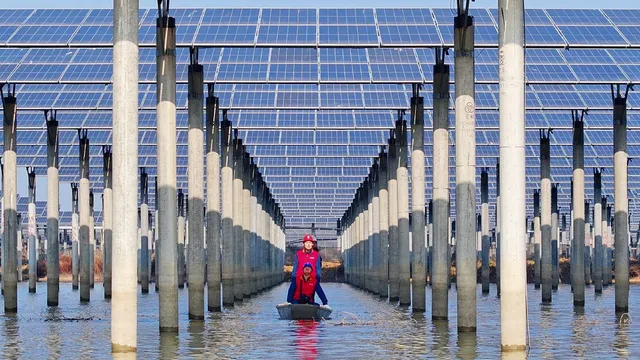
China has transformed from the world's largest polluter into a clean energy superpower, a shift that carries profound implications for global energy markets and climate policy. Since 2006, China has been the biggest emitter of greenhouse gases, but its aggressive investment in renewable technologies has now positioned it as the undisputed leader in solar and wind power. In May 2025, the country achieved a remarkable milestone by installing solar panels at a rate of up to 100 per second, a pace that underscores its industrial capacity and policy commitment. This surge has pushed China's total solar capacity beyond one million megawatts, nearly double the combined capacity of Europe and the United States, and enough to power the entire European Union. Wind power has also expanded dramatically, with China's installed wind capacity now more than three times that of the United States, its nearest competitor. These achievements are not accidental; they stem from decades of state-led industrial policy, massive subsidies, and centralized production goals that have allowed Chinese manufacturers to dominate the global supply chain. Today, China controls approximately 90% of the world's solar manufacturing, over 70% of wind turbine production, 80% of battery cells, and 70% of electric vehicles. This dominance has driven down costs significantly, with Chinese wind turbines now 30% to 50% cheaper than those made in the United States or Europe, making renewable energy more affordable globally. However, this rapid expansion has not been without controversy. The concentration of production in China has effectively wiped out solar panel and battery manufacturing in the United Kingdom and much of the West, raising concerns about supply chain security and economic dependence. Ethical issues also loom large: more than half of the polysilicon used in solar panels is produced in Xinjiang, where Uighur Muslims have been subjected to forced labor, according to reports. These concerns are weighed against the environmental benefits of cheap, clean energy that reduces reliance on volatile oil and gas markets. Looking ahead, China's renewable sector faces significant challenges, including energy storage and grid connection problems, as renewables are intermittent and often located far from population centers. Despite these hurdles, the International Energy Agency projects that solar will become the largest single source of electricity by the early 2030s, with wind following closely. The broader context is captured in Dan Wang's book "Breakneck: China's Quest to Engineer the Future," which describes China as an "engineering state" led by technical experts, contrasting with the United States' "lawyerly society" driven by legal minds. This difference in governance styles has shaped each country's approach to industrial policy and technological development. While the state's role in capital allocation has sometimes led to oversupply, as seen in real estate and green tech sectors, China's renewable energy boom demonstrates the potential of coordinated state action to accelerate the energy transition. The implications for the world are significant: cheaper renewable technology could help developing countries leapfrog fossil fuels, but it also raises questions about geopolitical leverage and the ethics of supply chains. As China continues to scale up its renewable capacity, the global energy landscape is being reshaped, with both opportunities and risks that will unfold over the coming decades.

Comprehensive report
Full story,
in detail.
Trace the developments that led here, see how the story evolved, and understand the forces and wider context surrounding it.