
Topic overview
Briefly
- Health Secretary Kennedy's taxpayer-funded autism research has produced no evidence linking vaccines
- Trump signed an executive order calling for fewer childhood shots and separating the MMR vaccine
- Leading autism scientists and advocacy groups were not consulted on Kennedy's closed-door project
What happened
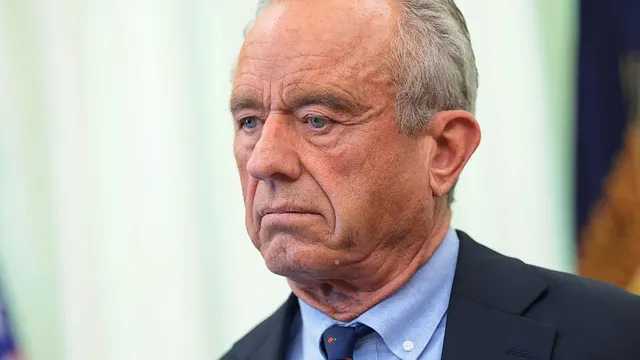
President Donald Trump has taken executive action to reduce the number of routine childhood vaccinations administered in the United States, publicly asserting a connection between the shots and rising autism rates. This directive comes despite the fact that Health Secretary Robert F. Kennedy Jr., a longtime vaccine skeptic, has been conducting a closed-door research project that has so far failed to produce any scientific evidence linking vaccines to the disorder. The situation reveals a significant disconnect between the administration's policy actions and the scientific findings of its own health agencies.
The president's order to separate the measles, mumps, and rubella (MMR) vaccine into individual components is a departure from standard practice followed by peer nations. During a Cabinet meeting, Trump pressed Kennedy on the progress of his autism research, calling it "so important." Kennedy responded that he was racing to find answers before the end of his term, acknowledging the president's impatience. The following day, seated in the Oval Office, Trump repeatedly made the connection between autism and vaccines just before signing the executive order. While Trump has not specified which routine vaccinations he believes might be to blame, he notably praised the polio vaccine as "amazing" during the same White House event, creating an inconsistent public message.
Kennedy's research initiative, which has consumed millions of taxpayer dollars, has been characterized by leading scientists as extraordinarily opaque. Helen Tager-Flusberg, a prominent psychologist who leads the Coalition of Autism Scientists, described it as "the most closed project" she has ever encountered, adding that "this is as opaque as it could possibly be." Prominent autism advocacy groups, scientists, and researchers have not been consulted on the project, and no public status updates have been provided. The White House has declined to answer questions about what research is informing the president's opinions or which vaccines he believes could be linked to autism. Other federal agencies, such as the Department of Education, have engaged more directly with leading autism advocacy groups during meetings, but according to advocates like Allred, no one has reached the secretary level.
The scientific consensus remains firmly against any causal link between vaccines and autism. A large study published in JAMA Pediatrics in August found no such evidence. The observed increase in autism diagnoses is attributed by various studies to greater awareness and screening, a more expansive definition of the disorder, and parents having children at a later age. Despite this, Kennedy told the president he was committed to finishing the work within the administration's remaining two years, moving with an urgency that the deadline demands. White House officials have declined to answer questions about the status of Kennedy's efforts to identify the cause of autism, leaving the public and scientific community in the dark about a policy direction that could have significant public health implications.

Comprehensive report
Full story,
in detail.
Trace the developments that led here, see how the story evolved, and understand the forces and wider context surrounding it.