
Topic overview
In brief
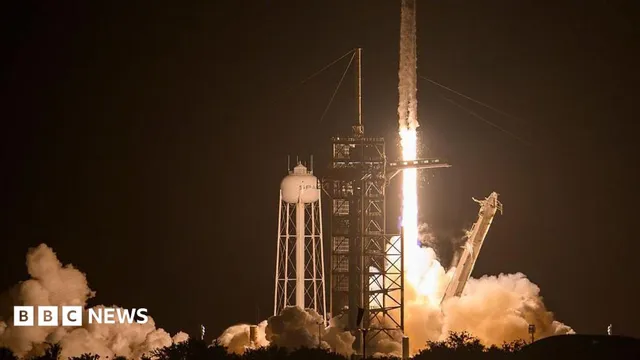
- A piece of SpaceX's Falcon 9 rocket is expected to have crashed into the Moon, following its launch in January 2025.
- The impact is anticipated to occur near the Einstein crater, which is visible from Earth, although the collision itself may not be seen without advanced telescopes.
- Experts assert that the event poses no danger to Earth and presents a unique opportunity for scientific study of lunar impacts.
Summary
Scientists have reported that a piece of a SpaceX Falcon 9 rocket, launched in January 2025, is on a collision course with the Moon. This upper stage of the rocket, weighing at least 4,000 kg and traveling at approximately 5,400 mph, is expected to have already impacted the lunar surface. The collision is anticipated to occur near the Einstein crater, which is in daylight and visible from Earth. While the impact itself may not be seen with the naked eye, astronomers with advanced telescopes are expected to monitor the event, capturing the flash and plume resulting from the collision. Independent confirmation of these details remains limited, and experts have stated that the event poses no danger to Earth. The opportunity to study the impact is seen as significant for scientists, as they can gather data on the effects of such collisions on the Moon's surface. The situation arose from the Falcon 9's successful launch, which was intended to send lunar landers into space, inadvertently leaving a portion of the rocket on a trajectory towards the Moon. As the event unfolds, various telescopes and space probes, including NASA's Lunar Reconnaissance Orbiter, will track the impact, while a citizen-science project invites amateur astronomers to document the occurrence.