
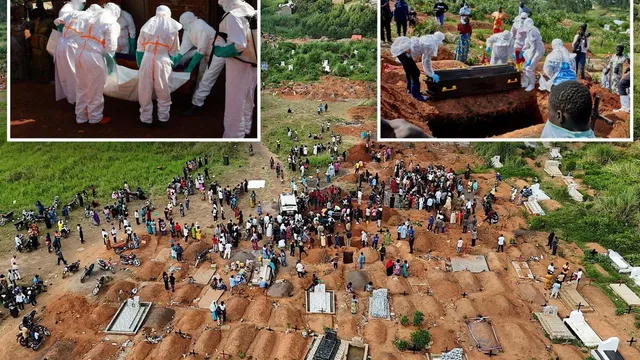
Topic overview
In brief
- The Ebola outbreak in eastern Congo has resulted in over 1,700 deaths and 3,802 recorded cases.
- Challenges in controlling the outbreak include community spread, mistrust, and armed conflict.
- The outbreak has progressed faster than any previous Ebola outbreak, prompting urgent response efforts.
Summary
In eastern Congo, an Ebola outbreak has resulted in over 1,700 deaths since it was declared on May 15. The outbreak is primarily concentrated in Ituri province, which accounts for nearly 90% of the cases, with a total of 3,802 recorded cases. The Africa CDC Director-General Jean Kaseya noted that nearly 80% of new cases are arising from community spread rather than contact tracing, indicating a significant challenge in controlling the outbreak. The World Health Organization is monitoring over 17,000 potential contacts, with many being seen daily.
The outbreak has been linked to the Bundibugyo virus, for which there are no approved vaccines or treatments. The response to the outbreak has been hindered by various factors, including delays in contact tracing, difficulties accessing affected areas, and community mistrust. Armed conflict and illegal mining in the region have further complicated efforts to trace individuals who have come into contact with infected persons. The WHO has reported that more than 100 healthcare workers have been infected since the outbreak began, highlighting the risks faced by those on the front lines.