
Topic overview
Briefly
- AI companies previously had no consumer-facing apparel lines.
- OpenAI and Perplexity now sell clothing mimicking streetwear brands.
- Critics say the merch deceptively masks AI's societal threats.
What happened
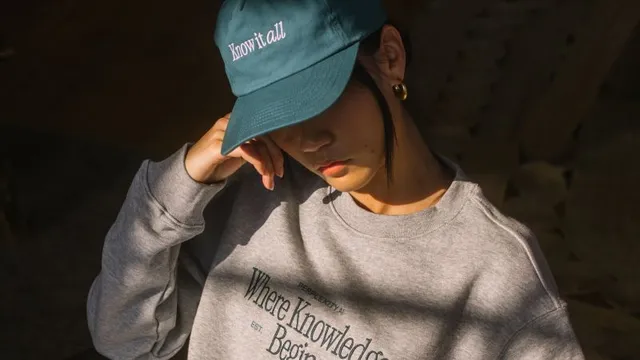
Major artificial intelligence companies are increasingly producing branded clothing and accessories, a trend that reveals a deeper struggle over public perception as the technology becomes more pervasive and controversial. OpenAI, the company behind ChatGPT, released a capsule collection with a lookbook that deliberately mimicked the aesthetic of influential streetwear labels like Kith and Aimé Leon Dore, known for turning laidback knitwear and box-cut T-shirts into menswear trends. Ben King, a design director at OpenAI, explained that his team wanted to create items that would resonate with their community by observing what their boosters were already wearing. The strategy is not limited to OpenAI. Perplexity, another AI company, has also developed merchandise, with one designer who worked on the project comparing the effort to the ubiquitous billboards along Highway 101 in Silicon Valley, suggesting the clothing targets competitors and potential employees rather than a general consumer audience. Palantir, a company already known for controversy, offers a chore jacket that seems designed to provoke reactions when people see its logo in public.
This push into physical goods represents a calculated attempt by AI firms to evolve into beloved consumer brands on the level of Apple or Nike. For years, the popular image of a Silicon Valley engineer was someone who deliberately ignored fashion to signal a focus on creation over appearance. That is now changing as the tech industry shows more interest in cultural signifiers. The merchandise serves as a form of soft power, an attempt to make companies that build world-altering software appear approachable and harmless through cotton and canvas. The limited production runs of these items create a sense of exclusivity, framing the clothing as something for people who are deeply enthusiastic about AI. Wearing the merchandise functions as a low-key signal within the tech community, similar to wearing a sports jersey or a band T-shirt, indicating that the wearer is not just observing the AI wave but is actively part of it.
The trend has ignited a sharp debate that extends far beyond fashion. Critics argue that the merchandise is a deceptive tactic. Graphic designer David Rudnick characterized the companies as wolves in sheep's clothing, attempting to manufacture a feeling of harmlessness. He compared wearing the merch to displaying the colors of a cartel or a paramilitary organization. This perspective frames the clothing as a way for individuals to symbolically align themselves with powerful entities they believe will dominate the future, a form of self-protection by wearing the colors of a feudal lord. The underlying fear is that society and jobs are about to be swallowed by a handful of companies, and wearing their logo is a way of signaling allegiance to the winning side. The debate is a microcosm of the wider conflict between those who stand to benefit from an AI-dominated world and those who feel threatened by it.
The very nature of AI also complicates the ambition of these fashion projects. AI's outputs are inherently derivative, synthesizing existing data rather than creating from scratch. This raises an open question about whether the merchandise can point toward something novel and distinct or if it is doomed to be a mere synthesis of references. One observer noted that while the collection was clearly about brand marketing and positioning AI companies as aspirational and cool, they would not personally wear a Codex T-shirt. King from OpenAI rejected the notion that a product from an AI company lacks humanity. The success of this strategy remains uncertain, as it is not clear that the merchandise appeals to anyone beyond the true believers who are already deeply invested in the technology's promise.

Comprehensive report
Full story,
in detail.
Trace the developments that led here, see how the story evolved, and understand the forces and wider context surrounding it.