
Topic overview
Briefly
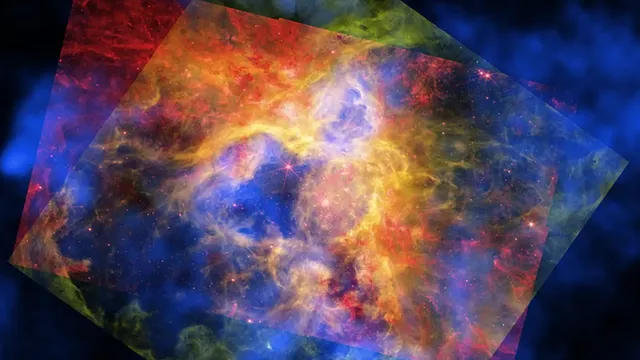
- NASA scientists have revealed a new composite image of the Tarantula Nebula, showcasing its vibrant structure.
- The image combines data from the Chandra X-ray Observatory and the James Webb Space Telescope, highlighting thousands of young stars and gas.
- The findings indicate that the Tarantula Nebula is losing energy, which is crucial for understanding star formation processes.
What happened
In a significant development for astrophysics, NASA scientists have unveiled a vibrant new image of the Tarantula Nebula, a star formation region located in the Large Magellanic Cloud, approximately 160,000 light-years from Earth. This nebula, also known as 30 Doradus, is home to thousands of young stars embedded within a complex structure of gas and dust. The new composite image integrates data from multiple NASA observatories, including the Chandra X-ray Observatory and the James Webb Space Telescope, showcasing the intricate details of this cosmic region.
The Tarantula Nebula has been a focal point for astronomers due to its rich star formation activity. The latest observations reveal that the nebula is losing energy from various sources, with up to half of its hot gas leaking out. This phenomenon is attributed to turbulent mixing, which cools the remaining gas, and thermal conduction that transfers heat to cooler shell material without mixing. These findings are crucial for understanding the lifecycle of stars and the dynamics of star-forming regions.
The composite image not only highlights the beauty of the Tarantula Nebula but also serves as a valuable tool for researchers. By combining data from the Hubble Space Telescope, the James Webb Space Telescope, and the retired Spitzer Space Telescope, scientists can analyze the processes occurring within the nebula more comprehensively. The research paper detailing these findings has been published in the Astrophysical Journal, contributing to the ongoing exploration of cosmic phenomena.
As scientists continue to study the Tarantula Nebula, they aim to uncover more about the mechanisms driving star formation and the evolution of galaxies. The insights gained from this research could have far-reaching implications for our understanding of the universe and the processes that govern it.

Comprehensive report
Full story,
in detail.
Trace the developments that led here, see how the story evolved, and understand the forces and wider context surrounding it.