
Topic overview
Briefly
- Data center construction jobs pay 25-30% more than previous roles, with some workers earning over $6
- Tech giants like Meta and Amazon fund projects, while homebuilders struggle to compete for workers
- Experts say competition for electricians and other trades may worsen housing shortages
What happened
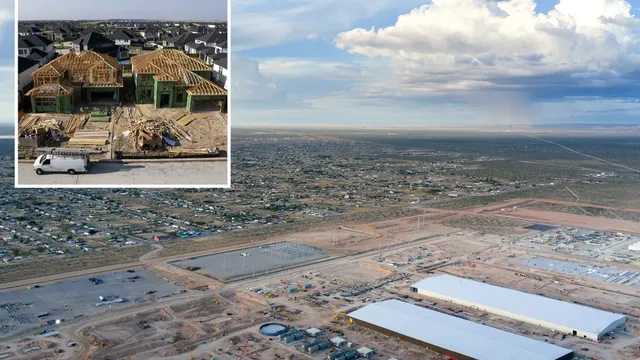
The rapid expansion of data centers across the United States is reshaping the labor market for blue-collar trades, creating a surge in high-paying construction jobs that is intensifying competition for skilled workers and straining the housing industry. Nvidia CEO Jensen Huang has predicted that the next wave of six-figure jobs will not originate from Silicon Valley but from the crews building the data centers that power the AI boom. This prediction is already materializing in paychecks: workers transitioning into data center construction are experiencing salary increases of 25% to 30% compared to their previous roles, according to the Wall Street Journal. For instance, an Ohio drywall contractor who took a supervisor position overseeing 200 workers at a data center site now earns over $100,000 annually, while an electrician managing crews across six sites in Northern Virginia tops $200,000. The demand for labor is immense, with the Information Technology and Innovation Foundation estimating a shortage of roughly 439,000 workers in the sector this year alone, particularly electricians, pipe layers, and HVAC technicians. The boom is not confined to traditional tech hubs; states like Pennsylvania and Ohio are also experiencing significant data center development, which could benefit from an influx of tradespeople as their homebuilding levels are lower than in Southern states.
The financial backing for these projects comes from tech giants such as Meta, Amazon, Google, and Microsoft, which are investing billions of dollars. This contrasts sharply with homebuilders, who operate on thinner margins and must sell homes at prices buyers can afford, limiting their ability to compete for the same workers. The question arises whether the labor drawn into data center construction will eventually flow back to residential building, but experts see a more complex picture. Sean Plunkett, a home advisor and realtor with Triple Crown Homes, notes that a carpenter constructing a house would not switch to a data center project, but there could be competition among electrical contractors relied upon by homebuilders for the same limited pool of licensed electricians. This competition manifests not in headline worker counts but in longer wait times for specialty subcontractors. Ryan Starr, a principal architect at Starr Designs & Architecture, sees a different risk, stating that the data center boom temporarily makes the housing issue much worse. The Realtor.com state report cards on affordability and home building highlight where the fight is furthest along and where it overlaps with the data center boom. Organizations like Let America Build are pushing for more homes, faster, but if data center electricians later chase other high-paying jobs instead of working on homes, the benefit to homebuilding could be minimal.
The timing of any potential benefit is a critical factor. Plunkett acknowledges that training takes years to catch up with demand, but as it does, the short-term competition for workers might eventually create a greater pool for homebuilding as well. Thompson, presumably an industry observer, is willing to bet on that pipeline paying off, expressing expectations of a few bumps in the road but ultimately benefiting the residential end market. The data center boom is thus a double-edged sword: it offers lucrative opportunities for tradespeople and addresses the AI industry's infrastructure needs, but it exacerbates the existing shortage of skilled labor for housing construction, potentially worsening the housing affordability crisis in the short term. The long-term effects remain uncertain, hinging on whether the expanded workforce will eventually transition to residential projects or remain in the higher-paying data center sector.

Comprehensive report
Full story,
in detail.
Trace the developments that led here, see how the story evolved, and understand the forces and wider context surrounding it.