
Topic overview
Briefly
- Iran's Basij Organisation commander claims the Strait of Hormuz is under Iran's control.
- This assertion follows President Trump's statement of U.S. dominance over the waterway.
- The ongoing conflict has led to heightened tensions and military posturing from both nations.
What happened
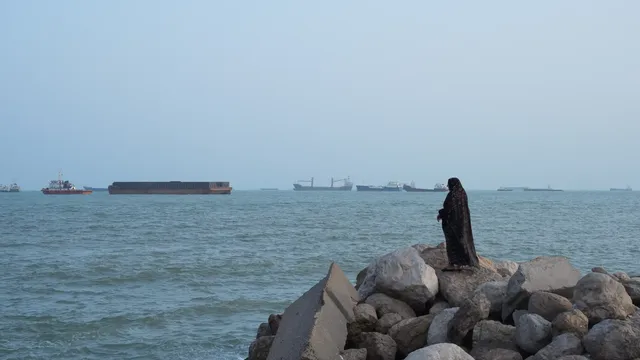
Iran has asserted its control over the Strait of Hormuz, a critical waterway for global oil and gas transit, following claims by U.S. President Donald Trump that the United States holds total control over the strait. On August 12, 2026, Hojjatoleslam Hossein Taeb, the commander of the Basij Organisation, declared that the strait is under the management of the Islamic Republic, emphasizing that Iran continues to operate securely in the region. This statement came in the wake of escalating tensions between Iran and the U.S., particularly since the onset of the U.S.-Israeli war on Iran on February 28, 2026, which has seen Iran effectively block the strait, through which a significant portion of the world's oil and liquefied natural gas transits. The U.S. has responded by imposing a naval blockade on Iranian shipping and ports, while asserting its commitment to ensuring freedom of navigation for vessels traveling to and from non-Iranian ports. Iran's military command has stated that no vessel can pass through the Strait of Hormuz without Tehran's permission, labeling U.S. claims about normal passage as falsehoods. Senior Iranian officials have indicated that the reopening of the strait is contingent upon the U.S. fulfilling its commitments under an interim deal aimed at ending the ongoing conflict. Iran's Foreign Minister Abbas Araghchi criticized U.S. intelligence failures, suggesting that Washington's actions in the strait represent a significant miscalculation. The situation remains tense, with Iran signaling a willingness to respond more aggressively in any future conflict, as it seeks to prolong the war while believing that the economic pressures do not pose an existential threat to its government.

Comprehensive report
Full story,
in detail.
Trace the developments that led here, see how the story evolved, and understand the forces and wider context surrounding it.